Web Savvy Marketers

  • About
  • Services
    • Strategic Planning
    • Marketing Programs
    • Full-Service Web Design and Development
    • Content Marketing
  • Industry
  • Portfolio
  • Blog
    • Tools & Tips
      • Google Tips
      • Internet Scams
      • Motivational
      • Tips for a good website
      • Website Writing Tips
    • Marketing
      • Internet Marketing 101
      • Philanthropy
      • Search Engine Optimization (SEO)
      • Social Media
      • Web design/Internet Marketing
    • Web Design
      • E-commerce
      • Website Maintenance
  • Contact Us

Have Fun With GIFs In Your Marketing

April 15, 2016 Beth Devine

Have fun with GIFsIt all started with emoticons. Then it was online memes. Today, GIFs are more than corny banner ads or headache-inducing social avatars.  The animated GIF is a common staple seen across social media, blogs, and websites.

Like video, GIFs are visual eye candy that will grab your audience’s attention, but their format is short and sweet, only about five to fifteen seconds long. They can be a series of still images or a short video clip that plays over and over again.

They don’t (usually) have audio, giving GIF’s a retro appeal with their silent film feel. Besides, there’s something annoying about repeatedly hearing the same sound, whereas we can watch something many times over without the same aversion.

Images invoke emotional responses, break language barriers, explain complicated ideas, and prompt imagination — all at a glance. Make them come alive with GIFs and you’ve got a riveting story in motion.

Marketers have jumped on the official GIF bandwagon with new ways to use them for stand-out content that delivers its message fast. Why use words alone when a GIF can – literally – stand up and do a jig for you?

5 Ways To Use GIFs In Your Marketing

1. Social Media

Facebook joined the ranks of platforms that support GIFs, along with with Pinterest, Instagram, Tumblr, Twitter, and Google+. Because images generate more likes, reactions, and shares than plain text, posting GIFs makes your content more clickable and increases engagement.

So what are you waiting for? Now that you can easily add a GIF to social media updates, the internet relies even less on words. Why say anything with words when a moving image says it so much better?

2. Blog posts

Why settle for static images when you can boost your blog with GIF-appeal? Follow suit with sites like BuzzFeed and Unbounce and make your posts jump off the page with an occasional GIF.

GIFs give your audience an immediate message. Compared to asking your audience to click on a link or watch a video (which they might not even do), a well-timed GIF doesn’t require asking for anything.

3. Free Ebooks and Whitepapers

Creative use of GIFs can change boring static ebook images into looping graphics of relevant text, charts, and quotes. Spice up your offerings with captivating GIFs instead of settling for the same old inert images.

4. Announce New Features

Anytime you have something new to shout about, whether it’s new software, a new service, or a new product, GIFs are a way to call attention from the rooftops of your corner of the internet. Their instantaneous nature make them effective attention-grabbers.

Attach them to your newsletter, send in an email, or include them on a landing page, in your “About Us” page, or on your home page. They take up less place than posting a series of single static images. 

5. Describe How To Do Things

Have you ever tried to explain something in text but were unable to keep it short and simple with just words? Try making a GIF to describe how you did it.

Whether it’s how you manage your files, a step in your software solution, how to do a quick install, or any quick fix. Think of ways to highlight a key function or feature, such as a series of GIFs demonstrating a short tutorial or illustrating the steps to a process. The sky’s the limit with what you can record into a GIF.

Look for how to make GIFs in the next post.

Filed Under: Featured, Kacee's Posts, Marketing, Tips for a good website, Tools & Tips

How To Persuade People With the Ugly Green Drink

March 22, 2016 Beth Devine

ugly green drink

Persuading people to agree with you and do what you’re asking them to do is difficult. Whether you want them to buy your product or service, vote in a particular way, or make different lifestyle choices, it involves understanding the Ugly Green Drink.

For my son, drinking smoothies is all about flavor. Imitating Starbuck’s new smoothie glamour or pushing veggie health won’t convince him to drink the Ugly Green Drink. I tried that.

It has to taste good, and if it’s green, then that’s just not possible according to the Book of Hungry Teen Boys. Despite being ugly and green, it’s just as good as purple or red smoothies, but try telling that to a green-phobic youth.

He helped me earn my badge in the art of persuasion. Now it’s your turn to learn the Ugly Green Drink technique and get the help you need to persuade people.

Say What You Have To Say

How you say something is as important as what you say. If you say something with anger or resentment, your listener will put up automatic defenses. If you say something with drama and self-judgment, it will be received as dramatic and worthy of judgment.

When I said the Ugly Green Drink was better for him than fruit-only smoothies, and if he couldn’t see past the green then he wasn’t trying to be an adult, I was the know-it-all mother. And he held fast to his question-mom-in-everything thinking.

Like the story in Seth Godin’s Poke the Box when the 1860s Hungarian doctor realized washing hands would save lives. No one listened to him. Can you guess why? Because he knew it all and didn’t bother to pretend otherwise. He was a pompous jerk.

Say what you have to say by taking into account how you say it so your audience will think you have something worth listening to.

Frame Your Story So It Fits Their World View

People suffer from what can be called a “moral empathy gap.” This inability to comprehend moral world views that are different from our own renders us incapable of persuading others to adopt our position.

In other words, you can’t persuade someone to take a different course of action or buy a product you want them to buy when you use your own system of belief. Without empathy, your attempts at persuasion will fall flat.

The Ugly Green Drink didn’t need to be healthy or a status symbol. Unlike Mikey of the Life cereal ad, persuading my son to like it was not as simple as shoving a bowl in front of him. I needed to use empathy and step inside his shoes.

“This is the ugliest drink you’re ever going to try; it’s as disgusting looking as the bottom of your backpack.” However, if I can persuade him that green doesn’t mean it tastes like cooked spinach, I’ve won. But first I have to get on his plane of thinking.

They’re Not Wrong

It’s close to impossible to persuade people that they are wrong and then have them do something differently. You can convince them with facts and figures by appealing to their intellect, but you can persuade them by “appeals made to the will, moral sense, or emotions.”

Godin reminds us that marketers don’t convince, they persuade. Moms serving Ugly Green Drinks must also learn the fine art of appealing to the passions, fears, and fancies of their target teens. Forget the brain and go for the heart.

Unless it’s brains you’re eating. “It’s so gross! If you drink it, you’ll be drinking monkey brains!” That was enough of a challenge for Calvin of Calvin and Hobbes to eat his smelly dinner. It warrants a try.

Help persuade your audience to make a change or a new decision instead of admit they’re wrong. Arnold Schwarzenegger shows us how with his bold, four-asterisk word in an appeal to our future.

Use Placebos To Surround What You’ve Built

Godin’s Placebos begins with a story illustrating how placebos work. A guy walks into a health food store with a nasty cold and asks for the strongest placebo they’ve got. Unfortunately, that particular store didn’t carry any.

“A placebo is a story we tell ourselves that changes the way our brain and body work,” Godin says. You have to first make something terrific that works, and then you have to build a story around it to break through all the noise and competition.

This is emotion again, the appeal to the heart and soul of your audience by going beyond the obvious features and benefits. “With the Ugly Green Drink you can forget about having to fork up boring vegetables. And you’ll be chugging down added protein you want for sports. All in mere seconds!”

I’m thinking Popeye the Sailor Man. He’s probably thinking The Expendables. Whatever works. Build a story around your great idea, product, or service, and let the placebo effect kick in.

Make Metaphors Happen

The Ugly Green Drink is my metaphor. It gives you imagery, helps you to understand the idea, and makes it easier to communicate it with others.

Put your metaphors at the beginning of your story. This way your audience doesn’t have to work so hard to understand your argument. The metaphor is the lens that focuses them in on your idea and helps to persuade them to think and act differently.

When you get others to drink the Ugly Green Drink, you’re persuading them to do something they might not want to do otherwise.

Pay It Forward

Simple reciprocity is a great persuasive device. Give someone an unexpected gift and you will create a need to reciprocate. Like the notion of pay it forward, people like to return favors as a way of showing their gratefulness. Think of how in your personal life you’re more inclined to ask someone for a favor if you’ve done a favor for them.

Businesses are applying this principle every day by offering free ebooks, free trial memberships, free samples, etc. The feeling of gratefulness for the free information creates a tendency to feel obligated to return the favor and make a purchase or a recommend to a friend.

Make sure you understand your audience and what they want before using reciprocity to influence their choices. Persuasion is most effective when the right favor is granted.

Offering my son a bowl of tortilla chips to go with the Ugly Green Drink will be far more persuasive than a dish of crunchy kale. Maybe I’ll work on kale chips next since I’m on a green roll.

Filed Under: Featured, Kacee's Posts, Marketing, motivational

7 Deadly Sins and Heavenly Virtues of Social Media Marketing

March 11, 2016 Beth Devine

social media marketingUnless you’ve hired a divine saint to sit before the keyboard, your brand is not immune to the seven deadly sins. Like the temptations in our daily lives, social media marketing falls prey to the same vices.

The concept of seven deadly sins and their contrasting virtues are centuries old, handed down to us from the middle ages from an epic poem, Psychomachia, or Battle of Souls, written by Prudentius. It’s an allegory that describes defeating the seven sins through the opposite seven heavenly, or contrary, virtues.

To overcome the vices that can bog down your brand, you can use the seven virtues of generosity, temperance, kindness, patience, humility, diligence, and chastity. Breaking the bonds of the vices of greed, gluttony, envy, anger, pride, sloth, and lust means working the seven virtues as they apply to social media marketing.

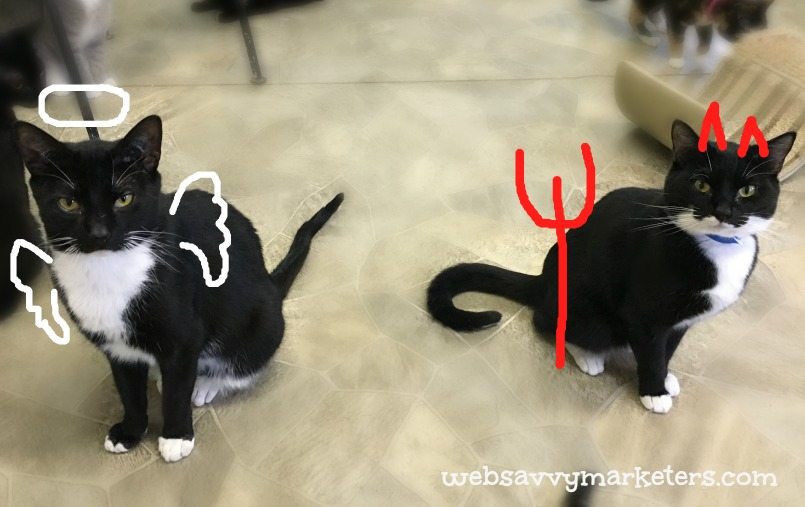
So grab your halos and get some divine inspiration to see how you can battle these social media evils. And don’t forget to bring your sense of humor along.

Practice Kindness, Not Envy: Don’t Bore People

There is no greater sin in social media than boring your audience. When you defeat boredom, you are prevented from falling prey to all sorts of other lesser vices, such as ineffectiveness and irrelevance.

In turn, you will stir up the envy you want your competition to experience when they visit your social media pages. Put an end to boredom and spread around the best of your brand with helpful social media posts.

Keep your articles and images not only interesting and informative, but surprise your audience with some tasteful humor. Sometimes people just want to be entertained.

Be Generous: It’s Not All About You and Your Brand

The opposite of generosity is greed, and being greedy on social media is when you make it all about you. Your audience might want to learn more about you, but only in ways that are going to give them something in return.

For example, when posting about a new product, service, or recent work, find a way to relate it to your audience. Always ask, what’s in it for them? When it’s about you, it’s still got to be about them, your audience.

Have you been to the center of the universe? I guarantee your brand’s not there.

Practice Patience: Don’t Annoy Your Followers

It’s easy to be patient when everything is going well. When things get ugly, however, how well do you react? Do you stay calm or do you give the troublemakers something to be sorry for?

Patience is the virtue that counters anger, and it comes in handy when followers make rude or untrue comments meant to incite your brand’s wrath or cause you harm.

In other words, no matter what happens, don’t annoy, irritate, or otherwise anger your audience. When it comes to best practices, deviating from this virtue will swiftly turn the tide against you. Whereas it’s expected that followers can be angry and impatient, your social media posts and comments have to reflect the very best behavior.

There are only so many times you can blame your lapses in judgement on autocorrect.

Be Diligent: Share Content Every Day

Being diligent means fulfilling your duties, cultivating a strong work ethic, and developing your talents. Diligence is the virtue that counters the sin of sloth and being lazy instead of having a zealous attitude.

Your social media marketing can reflect either a virtue of diligence or it can be wrapped up in the vice of sloth. Which attitude do you present in your social media campaigns?

When you share content on social media, be sure to include original content as well, such as your own blog posts or other articles. The opposite extreme to posting daily content is overindulging and dominating your followers’ feed, as the next vice, gluttony, describes.

In other words, diligence goes rogue.

Practice Temperance: Don’t Waste Time

With social media, the inverse of efficiency is true. The more time you spend on social media marketing, the less efficient you are. The more you practice temperance instead of its opposite, gluttony, the less you will fall into the trap of overindulgence and lack of moderation.

Being successful means engaging with your audience – but not wasting your valuable time by overdoing it. Social media is a valuable means of communication, giving brands and people a way to spread the word. There is so much more to content marketing, so don’t waste time with hours spent posting when it’s just one crucial component.

This has me wondering. What do Facebook employees do to waste time while at work?

Be Humble: Care About What You Share (and With Whom You Share It)

“Pride and excess bring disaster for man” because the secret to pridefulness is the disregard for everything and everyone else. Before pride causes your brand to crumble, remember that you owe everything to everyone.

Without your customers and followers, you wouldn’t have anyone to engage with in social media. Self-promotion is allowable and even expected as long as your ultimate goal is centered around your followers’ interests.

An over-appreciation for your brand’s self-worth is unattractive, unless you’re a peacock. Then strutting your stuff is expected.

Chastity: Pure in Style and Conduct

Most brands understand the value of a simple and modest presentation. If you know how to use it, sex sells, and has been since its earliest known use in 1871 by Pearl Tobacco.

If, however, you’re content to practice a more restrained approach in your social media marketing, then find a style that has decency, modesty, and is free of embellishment.

Are there safe ways to be chaste and sexy at the same time? Unsexy brands are finding a unique way to be attractive despite their blahness. See “How to turn something as unsexy as car rental into a social media hit“ and decide what works for you.

Good luck practicing the seven heavenly virtues on social media with your brand. Remember, as W. H. Auden said, “We are all here on earth to help others; what on earth the others are here for I don’t know.”

One thing’s for sure, they’re here, and so are you, so let’s make it good.

Filed Under: Featured, Kacee's Posts, Marketing, Social Media

Pay-Per-Click – What is it, Do I Need it and Can I do it Myself?

February 26, 2016 Beth Devine

Pay-per-Click or Adwords is a paid program that buys you ranking for your website. Most often referred to as Google Adwords, a good pay-per-click program can be effective across multiple search engines like Bing and Yahoo. This is an advertising campaign where you only pay if someone clicks on your ad.

If your industry is highly competitive, you don’t add content to your website frequently or are a fairly new company, getting on the first page of Google can be a challenge. Although we recommend investing in an overall content marketing program, it can take time for the search engines to rank your site. Pay-per-click allows you to have a strong on-line presence while you wait for your natural ranking to improve.

Can you manage your own campaign? Yes and No. Pay-per-Click programs give you the tools to create your own campaign however, unless you have a great deal of time to commit to becoming an expert, I would not recommend managing it. Search engines change their algorithms frequently. To run a truly effective campaign you need to have an thorough understanding of these changes.

We have worked with clients that have managed their own programs and once transferred to a company that does this alone have seen results that are twice as effective for half the cost. Managing a campaign is a combination of art and science and requires constant education to stay on top of it.

Please contact us at 860-432-8756 for help with your Pay-Per-Clicks (Adwords) Campaign.

Filed Under: Beth's Posts, Internet Marketing 101, Marketing, News

Love Is In the Air With Facebook’s New Reaction Buttons

February 25, 2016 Beth Devine

Facebook emoji buttonsThere’s a whole lotta new reactions going on in Facebook. No longer are you limited to “Like” when responding to a Facebook post. You now have five new emoji buttons to click: “Love,” “Haha,” “Wow,” “Sad,” and “Angry.”

The emoji buttons will automatically be added to your computer Web browsers, but to get the new feature on your iPhones and Android phones, you will need to go to the App Store and update the Facebook app. It appears that Windows and Blackberry phones are not yet in the loop.

New emoji buttonsOn the left is a post with the new reaction buttons displayed, and on the right is the post after you choose an emoji.

Using the new Facebook reaction buttons is easy. For desktop applications, simply hover over the Like button for the reaction emojis to pop up, then tap on one. For mobile devices, hold down on the Like button to get the buttons to appear. Once you’ve chosen your reaction to the post, the total reaction tally goes up.

To determine the breakdowns for the six buttons, simply hover over each emoji for a list of names, or click on any emoji to get the total count for each one. So far, love is the most popular button, with the new reaction emojis making their global debut this week after a trial run in Spain, Ireland, Chile, the Philippines, and a few other countries.

You can only choose one reaction at a time and even change your mind as often as you wish, while keeping the total tally the same. So while you might feel a strong urge to share the “Love,” an overwhelming need to express a “Wow” could surface, followed by a crazy “Haha” moment, which no one can really blame you for feeling. Now it’s all possible, but you have to pick just one, so make a choice already, for crying out loud.

Speaking of crying, you can finally express “Sad” when something calls for it, instead of settling for an awkward “Like” when it seems insensitive in response to a post about a pet who’s died or the latest news on the state of the climate. With the political debate in high gear, the “Angry” reaction could get some good use too, although “Haha” serves as a pleasant alternative.

Whether you choose to love or laugh, be sad or mad, this information is going to help Facebook and businesses. The new emotional bandwidth data gives users the satisfaction of expressing more specific feelings, while brands get the benefit of using these reactions to gauge future messages.

Marketers can use this knowledge along with Facebook Pages, where you have to dig to see any negative feedback. In the Insights category, you can see how many people hide a post, report spam, or unlike a page due to a post. The new information from reaction buttons can be helpful in understanding how each post is received. Before this when a follower hides a post, it could simply mean they don’t want their Newsfeed cluttered with brand posts and not because they don’t like the message.

How will the new reaction buttons impact Facebook? How will they affect society? Sandi Krakowski, a top social media influencer and thought leader, had this to say about the original “Like” button:

“The psychology behind a LIKE button and how we respond to this tiny button has changed our world and brought global strangers into a connected neighborhood. Studies reveal that people feel a reward when they are able to LIKE our content as a brand. They want to BELONG!”

That message calls for a giant WOW reaction. What we do with our emotional emoji buttons just might change the world again.

Filed Under: Featured, Tools & Tips

How to Get Found on the Internet: Nobody Cares What I had for Breakfast

February 24, 2016 Beth Devine

Whenever we approach the subject of blogging with our manufacturing clients we get the same push back…

  • Nobody cares what we had for breakfast, or
  • Our customers already know that

We’d like to address these two misconceptions.

First, a company blog has nothing to do with what one consumes for the first meal of the day. The concept of blogging is often confused with a teenager tweeting or posting their mundane life updates on Facebook. When in reality, blogging is simply a way to add content to your website. Blogs can be presented in various formats from a written piece to a video blog. All formats can be useful as long as the information presented is educational and written with the audiences needs in mind.

Second, as far as “our customer already knows this”, that doesn’t necessarily mean that they know you do it. We can say with almost 100% certainty that every manufacturing client we’ve worked with for the past 20+ years has told us at one time or another, “I can’t believe my customer didn’t know I did this”. The reason they didn’t know was that the one time they shared with the customer all their capabilities, the customer only had the one need, so they didn’t retain information about the other services/products. Blogging helps to keep all your capabilities in front of them at all times.

Blogging is essential for several reasons…

  1. Your search engine optimization depends on frequent updates to your site. The most recent content gets ranked higher and therefore, sites that publish more frequently get better ranking.
  2. Adding content to your site helps to ensure you can be found on a search. If you don’t have the right keyword terms on your site, how are people to find you when searching those terms?
  3. A good blog helps to establish you/your company as experts in the field. People are more interested in having a conversation with someone who obviously knows what they’re doing.
  4. Blogs can be used to help you to stay in front of your customers and prospects on a consistent basis (can be used to as content for an e-newsletter).

Many of our manufacturing clients are concerned with SEO (search engine optimization) as they want to be found on searches that apply to their business. These days SEO is all about content. Therefore, content creation is critical and blogging is the way to go.

Please contact us at 860-432-8756 for help with your content creation (aka blog).

Also from our Blog: 5 Reasons to Blog for Your Business: Blogging Resistance Beware

Filed Under: Beth's Posts, Internet Marketing 101, Marketing, News, Search Engine Optimization (SEO)

Are You Being a Bore On Social Media?

February 12, 2016 Beth Devine

free image resourcesSocial media is a fickle place. There is no room for a boring business. Platforms keep changing features and formats, and you’re competing for the attention of followers who are on multiple social sites, as well as with the 89% of other businesses who are active on social media.

Short attention spans and the growing competition, plus the accelerating demand for optimising your social media presence add up to a frenetic need for un-boring content. It’s crucial for businesses to avoid the stamp of “BORing,” spoken like only the bumbling Homer Simpson can.

Because when you’re a huge bore on social media, the only thing you’ll attract is the unfollow button.

One critical area to focus on is images. Here are some desperately needed image resources for fueling engagement and getting attention on social media. If you’re posting text without image content, then you might as well post computer code and hope a programmer out there is watching.

Give Your Images a Boost With These Free Resources

Free images with simple creative common license information is your solution for finding attractive visuals. No worrying about improper image use coming to haunt you one day with licensing nightmares and legal fines.

I’ve written about great free sources before, and even more free sources, and here are a few additional winners to give your online content a boost.

Albumarium

Don’t think aquarium or aluminum, think album upon album, and you’ve zeroed in on this catchy title and free image site. All the images are organized into albums, so there’s no specific photo search, just a like grouping by theme.

This is a useful tool when you find yourself looking for a group of photos with identical themes or settings, or photos taken by the same photographer for a uniform feel. This free photo site will allow you to share images under the CC 2.0 license, making attribution necessary, but it’s always a gracious gesture even if not required whenever the artist is known.

Free Images

Yes, this is an actual site, with nearly 400,000 free photos and images to use as you wish, with only minor restrictions. See their license agreement for the full scoop.

This charitable phenomenon of stoking creatives with free images probably began long before Free Images got their footing, but I dare say they were one of the first. Enjoy the fruits, and if you’re dabbling in the photo-shooting arean, don’t be stingy. Share your bounty here.

Good Free Photos

This is exactly what you will find on this site. Good free photos to enhance your social media posts and give you new stunning landscape photos, most of which are located in the United States album.

Be sure to check out the textures album for some great background ideas for your images, all free to use on the public domain. It’s going to be a party on your platform with these freebies.

Kaboompics

Don’t blame me when your image euphoria reaches its zenith. Blame Kaboompics and its brainchild creator and photographer Karolina Grabowska. She’s responsible for all the downloading photo-fun and creating you’ll have, because there’s nothing that screams free and beautiful all at the same time like this photo site.

So have at it, and don’t hesitate to report the lack of cats. It’s the one sad affair this site is having and it must end now.

Upicm

“Free pics, no tricks” on this site, and you won’t be disappointed in the vast array of offerings. While there isn’t a search option, there are many categories to choose from, including some unusual delights, such as graffiti, doors, memes, and icons, logos and buttons.

They say you can use their pictures on anything, from books and posters to album covers and products, and even your toenails are open for business. But don’t stop there. I’m sure you can outdo them with application ideas. Just don’t let on that I encouraged you.

Re:splashed

At 963 images and counting, Re:splash is a fabulous collection of free, high-def images from Crew, the same marketing team who does Unsplash, another free photo source. Apparently they’ve got a lot of free photos on their hands.

The search function is based on photo tags, and the growing collection features some of the most fascinating photography you’ll lay eyes on this side of the web. Get in the mood for something brilliant with their high-reaching, moody shots, and give your content something to shout about.

Google Advanced Image Search

Generally speaking, you do not want to find your images with a Google image search. However, most people aren’t aware of a custom image search feature on Google. The trick is to follow your Google search with a couple more clicks.

Once you enter your search words, click on the “search tools” drop down, followed by “usage rights.” Then click on “labelled for reuse with modification” so your image search will only include those that you can use for free, commercial use. For each image, check for any other usage restrictions, such as attribution requirements.

There you go. You’ve just uncovered Google’s little free image secret.

Public Domain Images

Get to the search function by clicking on weekly images, then peruse the archives of images hand-picked by a husband and wife team. They wanted to see a public domain collection of high quality images on a site that is clean and image-focused, so they built this resource just for you.  

See what’s for offer here and find some unexpected entertainment in the stories posted with some of the images, such as their surprise encounter with terrorists in Chicago that turned out to be the Transformer filmmaking shoot. You definitely won’t find boring here.

Stay tuned and get more ways to avoid boring on social media in the next post. I hope you’re up for it, because no one aspires to boring, not even politicians.

Filed Under: Kacee's Posts, Social Media, Tools & Tips

Social Media of the Future Is Here

January 25, 2016 Beth Devine

social media of the futureSocial media of the future is going to be more exceptional and carry bigger impact. It will be a more prominent go-to tool for self-expression. What does this mean for small businesses in 2016? How do brands prioritize the increased engagement that’s required to establish and maintain customer loyalty?

Every brand should have social media as part of their marketing strategy. Consumers want to have relationships with companies, and they want companies to participate in the narratives and systems that are being built to accommodate these relationships.

Here are three areas to focus your attention on in social media for 2016:

1. People Power Rules the Social Planet

Personalization is more important than ever. In the relationship between brands and customers, social media is a valuable asset in creating personal connections. There are three elements that are growing in the social arena to pay attention to:

  • User-generated content is a growing trend that gives companies a great way to engage with customers. Since Doritos began its Crash the Super Bowl contest, the user-generated concept has moved into other platforms, such as Instagram and Vine.

Lately, user-generated content is making waves in “unboxing” as brands jump in on the resurgence in popularity. While unboxing has been around as long as video-sharing software, the format is experiencing a rejuvenated appeal due to the rise in video sharing platforms and smartphone video technology.

Wikipedia defines unboxing as the “unpacking of new products, especially high tech consumer products. The product’s owner captures the process on video and later uploads it to the web.” It’s expanding to include cosmetics, fashion, cars, and toys, and brands are getting involved by sponsoring the unboxing stars.


  • Employee advocacy needs to be encouraged in companies for its positive effect on generating a wider reach and more personal appeal. Link Humans defines employee advocacy as” the exposure that employees generate for brands using their own online assets.” Your employees are your biggest advocates, and they will help build a more authentic trust for your company.


Instead of advancing more of your own marketing content, recruit your employees to talk about your company on social media, including forums and discussion boards. Create brand ambassadors to share a human perspective to your brand that customers will gravitate to. Most of your employees’ lives are already intertwined with social media. Enlisting their help to maintain and nurture company relationships as brand ambassadors is also a way to empower them.

  • Influencer marketing is a way to reach the audience of an influencer in your market. By establishing a long-term relationship with a key influencer, you establish trust with your customers while promoting your brand. Because audiences are so fragmented on social media, influencer marketing can help build your presence on multiple platforms.

2. Social Video Takes Over the World

Video is flourishing on social media. Facebook surpassed YouTube with daily video views, Twitter launched its own native video, and Snapchat reports it’s getting 6 billion views of video daily. U.S. adults watch an average of  5.5 hours of video every day.

Video shoots of the past are morphing into new formats. No longer does the prospect of costly professional video prevent you from creating and sharing video content. Today’s video, live photo, livestream apps like Periscope and Meerkat, GIFs, 8-second Vines, 15-second Instagram videos, and Snapchat video messaging are all easily adaptable to the novice videographer.

70% of companies now say video is the most effective tool in their online marketing belts, with video content dominating social media, thanks to the growing number of platforms and features.  Video is set to become one of the most powerful communication tools of 2016. Be sure to engage with social video using your most creative content. Try out livestreaming services such as Periscope, Blab, Snapchat, and Meerkat. Video offers an immersive experience for your customers, giving you an opportunity to communicate in the moment.

3. The Moment Is Now With Messaging

Companies are gradually entering into social messaging as the number of active users grows, with 75 percent of internet users worldwide accessing messaging apps on their mobile devices.  Business Insider reports that messaging apps are now bigger than social networks. Their growth will continue to accelerate as the apps change and more features are added.

Messaging gives internet users what they have come to expect, instantaneous responses and answers. Google’s high quality and fast delivery, and social media’s constant updating and auto-loading are conditioning people to expect consistently fast results.  

While social messaging for brands might be in an undefined grey realm, it’s only a matter of time before businesses are courted by new data for marketing purposes. Already, one-on-one customer support and direct service has moved into the messaging channels. The major social platforms all have a messaging component, making 2016 the year for companies to tap into the social messaging potential.

For 2016, you can expect new challenges and opportunities in digital — how will you use them to grow your business? Get your story out using the rising power of people, video, and messaging on social media.

Filed Under: Internet Marketing 101, Kacee's Posts, Tools & Tips

What Does Your Online Presence Look Like?

January 22, 2016 Beth Devine

OnlinepresenceDo you have a solid footing for your online presence for 2016? As another year begins to unfold with all its possibilities, once again we are confronted with goals, predictions, trends, expectations, and best-laid plans.

In order to have the competitive advantage, you need to create a strong identity online. To help you succeed in the year ahead, consider these three areas when establishing your online presence.

1. Make a Good First Impression With Your Website

An established business needs a professional website if you want to promote growth. Your site should reflect your current success as well as set you up for further advancement with a strategy that matches your business model. Your first impression is critical in attracting new clients and retaining current ones.

Your main internet tool is your website. Your customers aren’t looking you up in a phone book or the Thomas Register. A continually updated website helps with your SEO, so when people search for you online, they find you.

Does your home page address your customer needs? The immediate message should describe how your customer will benefit from your product or service. This is far more meaningful than an explanation of what the company does, what products and services are offered, and the who and when of the company’s background.

Frame your content around your customers rather than making claims about how great your company is. You’re more likely to elicit skepticism and indifference with self-promotion. Impress your customers with testimonials instead of giving them unsubstantiated claims that falsely inflate your business.

Don’t forget to keep your website updated. A good first impression will be lost if your site gets hacked through plugins that weren’t updated or you’re operating under the misconception that your small business site won’t be targeted.

2. Other Ways to Build Your Online Presence

There are many opportunities to grow your online presence once you’ve established a professional website. Does your business write white papers? Would short videos of your processes or service be of interest to your audience? Do you have a blog for sharing information with your customers? What else will help with your website activity?

When you create compelling content, you’re opening wide the doors to your website. The more you offer, the more your online presence grows. The more good content you share, the more your SEO will improve.

Remember, there’s no such thing as digital writing. Writing for SEO is dead, but writing for the reader is what’s going to help the search engines — and your readers — find you. So give your customers something to search for in addition to a well designed website.

3. Building Relationships on LinkedIn and Social Media

People want to do business with companies that share useful and relevant information. Today’s social media is a giant indicator of how important relationship building is in the business world. And for professionals, the social network is LinkedIn.

With over 380 million members, LinkedIn is growing in its B2B transactions. It’s the place to be for businesses, no matter what your expertise is. Connecting with your contacts just got a lot easier with the updated Voyager app, helping you stay informed about the conversations and content that matter the most.

Search also improved, and is 300% faster for your jobs, people, and group searches.

LinkedIn has also acquired Lynda.com, an online education company that features thousands of online video courses on a wide variety of topics. Employers can see what courses prospective employees have taken, and members can grow their skill sets.

Your online presence is incomplete without social media. Get involved in the online networking community and give your website more internet exposure.

Know Your Audience

Each of these three online areas has an important ingredient in common. To better understand your customers and their needs, all of your online strategies have to include audience awareness. Getting to know your audience’s demographics involves doing some market research. Entrepreneur defines market research as:

The process of gathering, analyzing and interpreting information about a market, about a product or service to be offered for sale in that market, and about the past, present and potential customers for the product or service; research into the characteristics, spending habits, location and needs of your business’s target market, the industry as a whole, and the particular competitors you face.

The ideas you get from your market research will inform your content ideas, helping you to target your audience’s needs. With the right information you’ll be a better online communicator whose online presence will reflect your concern to meet your customer’s needs.

Filed Under: Internet Marketing 101, Kacee's Posts, Tips for a good website, Tools & Tips

Cyber Attacks on Manufacturers

December 16, 2015 Beth Devine

cyber securityManufacturers operate using a network of systems including equipment, machines, and processes that are run in a centralized manner and are often backed up on a company owned server. The increased level of cyber attacks occurring within the industry are forcing manufacturers to strengthen security for company data and systems through security software, firewalls, and other security devices.

Manufacturers are well aware of the cyber risk of data loss and systems control. The threat of these cyber attacks comes from individual hackers or groups, organized crime rings, or under the auspices of foreign governments, with the purpose to steal trade secrets and intellectual property.

Despite all the security efforts to protect your company network and its proprietary information, manufacturers often overlook a critical security loophole — your company website.

The Cons of a Company Server

Having a company server doesn’t automatically qualify you to host your own website. Whereas the confidential company data on your server is password protected and encryption-enabled, and you continually update internal software vulnerabilities, the challenge is maintaining the same level of security with your website.

Hosting your own website leaves you open to hackers who are looking to get into your server for blueprints, your banking system, and your customer’s bank accounts. Manufacturers make attractive victims for cyber criminals due to your unique assets and the fact that you are often easy targets. In fact, believing you aren’t a target is one of the most common contributing factors to a manufacturer’s vulnerability.

A client-server model of networks has its own set of computer security vulnerabilities. Remember, your network is only as secure as your administrators and designers make it. There are many ways your server is vulnerable to cyber attacks, including the choice of server and how it’s configured and encrypted.

Here are three possible threats to a client owned server:

  1. Data theft due to improper configuration of servers.
  2. Misuse of user rights.
  3. Denial of Service (DoS) attacks on a server causing it to crash and lose data.

There is no way to prevent cyber attacks, just as there’s no way you can prevent someone from attempting to rob you. However, although no one is immune, you can reduce the risks by choosing strong cyber security programs and a website hosting service who’s dedicated to maintaining a secure server and continually managing it for optimum performance.

Your web hosting company will help you keep your site up and running, giving you reliable and advanced security, uptime, and disaster recovery. The greater the cyber defense of your website, the less likely you are to attract the interest of cybercriminals, and the safer your business will be.

If you do choose to host your own website with your confidential information, there are two important elements to be aware of to maintain website security:

  1. Keep an eye on your website analytics. If there’s something amiss, keen attention to your site’s analytics can reveal unusual activity. For example, if you see a sharp increase in unexplained visits from a foreign country, it could be a sign that you’re being targeted.
  2. Update everything. This means your antivirus software, operating systems, and all your website software, including WordPress software, its plugins and themes. The majority of these updates are security based. Hackers will take advantage of any security hole you’ve left wide open by not updating.

Manufacturers should always plan for the worst outcome. By assuming cyber criminals will target you, you will be prepared by giving yourself the best protection to your data and systems. The best safeguard for your manufacturing company isn’t a one-time effort or expense. It’s an ongoing process that involves utilizing security at all ports of entry, including your company website.

Filed Under: Security, Tools & Tips

  • « Previous Page
  • 1
  • …
  • 9
  • 10
  • 11
  • 12
  • 13
  • …
  • 41
  • Next Page »

Recent Posts

  • AI is the Greatest Thing for Writing…and the Worst – Part 2
  • AI is the Greatest Thing for Writing…and Also the Worst – Part 1
  • Non-Compliance Could Cost You $5,000 in Fines!
  • Blindly Embracing Technology
  • Improve Productivity, Save Energy and Reduce Waste!

Search this site

Call Us

860-432-8756

Our Location

222 Pitkin Street, Suite 125
East Hartford, CT 06108
Phone: 860-432-8756

Services

  • Marketing Services
  • Strategic Planning
  • Internet Marketing
  • Multi-Media Productions
  • Marketing Programs

Talk to Us

Follow us, subscribe to us, email us, or call us at 860-432-8756. We’ll use our Super Savvy Tool Belt to stay in touch however you prefer.

  • Email
  • Facebook
  • LinkedIn
  • Pinterest
  • Twitter
Sign Up for Email Updates
For Email Marketing you can trust.

Copyright © 2026 Web Savvy Marketers, LLC · 222 Pitkin Street, Ste. 125 · East Hartford, CT 06108 · 860-432-8756 ·
Privacy Policy | Terms & Conditions | Cookie Policy · Log in