Web Savvy Marketers

  • About
  • Services
    • Strategic Planning
    • Marketing Programs
    • Full-Service Web Design and Development
    • Content Marketing
  • Industry
  • Portfolio
  • Blog
    • Tools & Tips
      • Google Tips
      • Internet Scams
      • Motivational
      • Tips for a good website
      • Website Writing Tips
    • Marketing
      • Internet Marketing 101
      • Philanthropy
      • Search Engine Optimization (SEO)
      • Social Media
      • Web design/Internet Marketing
    • Web Design
      • E-commerce
      • Website Maintenance
  • Contact Us

Be Grateful and Generosity Will Follow

November 27, 2013 Beth Devine

be grateful and generosity will followThere are two things you can do that are sure to kill your negative buzz. That self-pity, bitterness, jealousy, and regret we all tend to cloak ourselves with, like Peanut’s Linus dragging his dirty blanket around with him everywhere he went.

It’s a simple two-step formula, and it requires only a minor sacrifice from you.

1. Ditch the dirty blanket

Instead of clinging to the negative, wrap yourself with gratitude.

2. Choose to share

Without the weight of negative thoughts, its a natural transition to turn around and give.

Your kindness counts, and whatever you choose to do as an individual or business will make a difference.

“How wonderful it is that nobody need wait a single moment before starting to improve the world.”  ~Anne Frank

Gratitude is a skill that anyone can practice and learn. Check out Robert Emmons “10 Ways to Become More Grateful” to reap the benefits of gratitude, which science shows can impact your social, physical, and psychological well-being.

Encourage Charity

Implementing this into your business’s mindset can be as simple as organizing a charitable effort, such as including a non-perishable food drive for your next event. When Web Savvy Marketers held their second anniversary celebration Mardi Gras style, we asked for donations for the local food pantry. In exchange for colorful beaded necklaces, guests brought cans of food and checks made out to the pantry.

“He that feeds the hungry spreads out a banquet more sweet and refreshing than luxury can bestow. “ ~The Voice, 1845.

This generosity fed over eleven families. From a small group of concerned individuals, a small section of the world was impacted. Creating opportunities for people to give requires little effort when its incorporated into a scheduled function through invitations, e-newsletters, and online announcements.

Charitable and fundraising efforts of all kinds can be the definitive buzzkill for any negativity that surrounds you. Finding non-monetary ways to help go beyond sharing your treasure. Giving your time and talent makes your donation come to life by connecting you to the causes you support.

  • Participate in volunteer activities where you live.

  • Use your skills to help raise awareness by sharing, liking, and commenting in your charity’s social media sites.

  • Help spread the word by persuading and connecting the charity with new potential donors.

Understand the need through a deeper connection to a charity by staying abreast of stories, statistics, and current events that impact the cause. This will help your connection to grow.

Make a Wall of Gratitude at Work

A workplace Gratitude Wall bulletin board is another way to help usher in a grateful attitude among employees. Be sure to focus on thanking people as opposed to things.

Saying thank you begins with you. Your thank you’s impact will be stronger when you are specific, giving details about the person, action, or thing you are thankful for.

Are you wondering what your gratitude quotient is? Take this online gratitude quiz by the Greater Good Science Center and find out!

The Greater Good Science Center at the University of California, Berkeley, in collaboration with the University of California, Davis, is launching a three-year, $5.6 million project, Expanding the Science and Practice of Gratitude with funding from the John Templeton Foundation.

Look for expanded gratitude results in medicine, education, schools, and workplaces as they work to promote the role of gratitude in society.

As you reach out to others and learn to wrap yourself with gratitude, remember this:

“When you are grateful, fear disappears and abundance appears.”  ~Anthony Robbins

To help keep the gratitude flowing, create a gratitude mandala like the one here using these free mandala templates.

Filed Under: Kacee's Posts, Marketing, motivational, Philanthropy

How to Be a Giver Not a Taker

November 21, 2013 Beth Devine

how to be a giver not a takerTo be successful, it’s commonly assumed that a Taker personality will outperform and overshadow a Giver personality.

Givers are people who help others without worrying how they will benefit; they are other-focused and motivated by altruism.

Takers look out for themselves first;  they are quick to take credit and self-promote, believing that the only way to achieve is to be better than everyone else.

In Social Trigger’s Derek Halpern podcast interview with Adam Grant on his latest book, Give and Take, Grant reveals the surprising truth about generosity and success.

It’s no surprise that most of us fall somewhere in the middle, believing that a good deed will be equally matched with a reciprocating act. The Matchers of the world operate with expectations of balance and fair exchange.

It makes sense that the common conception is Takers are the winners and take all, with Matchers falling in step just behind.

The Long Run Wins the Race

When you take in the big picture, this is not true. Grant explains that there’s a short run and long run reversal.

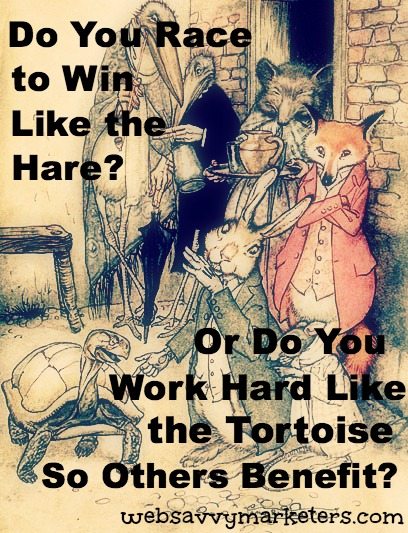
This reminded me of the story of The Tortoise and the Hare. The Hare self-aggrandizes from the moment he appears, whereas the Tortoise shows his goodwill immediately.

Takers imitate the Hare and take the fast route based purely on self-interest and winning, often burning a bridge or two in the process.

The Giver behaves like the Tortoise, willing to take the time to work hard, as in helping colleagues and customers, building trust and goodwill along the way.

The long run of the Giver eventually pays out like it does with the Tortoise. The investment of time, knowledge, and resources builds the social capital which will cheer a Giver on and create individuals who are genuinely glad of his or her success.

Tell the truth. Who were you rooting for, the Tortoise or the Hare?

How to Be a Giver Not a Taker and Still Succeed

Grant tells us that true Givers combine what Bill Gates called the two great forces of human nature: self-interest and caring for others.

If you care about the people and causes you are giving to, and you are really interested in and enjoy that form of helping, this mix of motives will sustain a giving nature.

Are Givers really concerned for others or are they more worried about their image? Grant calls anyone who gives solely to boost their image a Faker. They are in reality a Taker who is creating an “aura of generosity to mask their self-serving intentions.”

As for Matchers, if you’re giving for purely Matcher reasons – because you expect payback – then it will appear very transactional and people will see through it, and their appreciation level won’t be as high as it is with a Giver.

“You can easily judge the character of a man by how he treats those who can do nothing for him.”—Malcolm S. Forbes.

Jobs Vs. Gates: Giver or Taker?

Halpern asked Grant whether or not he believed Steve Jobs was a Taker and  Bill Gates is a Giver. Grant conceded that Jobs had Taker moments in his career relationships, but he was extremely customer-centric in his giving.

“Maybe the Giver-Taker spectrum is not the right axis in evaluating him,” Grant decides.

What Halpern and Grant agreed upon, however, was the Giver legacy versus the Taker legacy. A Giver will be remembered long after they are gone, but a Taker will be forgotten, even vilified, regardless of their achievements.

The Key to Getting a Giver Personality

No matter what your tendencies are, you can be a Giver and begin to experience the benefits of building giving relationships. Just ask yourself the all-important question, “What do I desire?”

The key to being a giver is to unlock the secret to your desire. For inspiration on finding your hidden desire, watch this video by Alan Watts, “What if Money Was No Object?”

How would you enjoy spending your life? Find the answer to these questions and you will learn how to be a Giver not a Taker, achieving your goals as well as enjoying the journey along the way.

It’s far more than a race to the top. As Hemingway said, “It is good to have an end to journey toward; but it is the journey that matters, in the end.”

Filed Under: Kacee's Posts, Marketing, motivational

Are Social Media Signals Helping Your Search Engine Ranking?

November 13, 2013 Beth Devine

search engine rankingWhy Use Social Media to Improve Search Engine Ranking?

When building a website, search engine ranking is an ever-changing horizon of influencing factors. Just when you think you figured it out, the view has changed and new elements have been added.

In a Social is the New SEO Hangout with Joshua Berg, Google+ SEO and SMO expert, and Mark Traphagen, Director of Digital Outreach for Virante Inc., we learn that Google is looking for social media signals.

When Google is ranking content, it looks for social media signals like how your content is shared, liked, +1ed, and commented on. Your authority on the Web has grown to include how well your content is doing in social channels.

But don’t panic. Old-school page ranking hasn’t gone away entirely. Keywords and link building, for example, are still important. It’s when you over-optimize your website with keyword stuffing and keyword repetition that will bring the wrath of Google upon it.

Ask “Does It Sound Right?”

Instead, do what Berg calls “natural writing,” or writing in a normal conversational language, varying your keywords and keyword phrases, using a “reasonable amount of mix and match throughout your pages.”

Write to create interesting, helpful content that users will want to share. This is where the social media signals come into play.

Google+ Exists for the Data

Google’s effort to improve search results means having a broader understanding of users’ experience and intent. Search and social media are no longer separate.

This is why, according to Traphagen, they created Google+. In order to better understand what you are discussing, sharing, and liking, they needed a social channel they had access to.

In terms of which social platforms will send strong social media signals, Berg says “Google+ will give you a much bigger advantage.”

Traphagen backs that up with a story of a user who noticed that a website’s higher ranking appeared to be directly related to Facebook shares. Matt Cutts, who heads Google’s Webspam team, responded affirmatively that this in no way caused a higher ranking.

Berg explains that this is partly due to no-follow tags in other social media platforms, whereas Google+ was created to have all follow links in everything. The overall effect of social media signals, Berg assures us, does include a diverse range from the different platforms, so don’t put your eggs all in one basket.

What is the Special Power of Google+?

Traphagen explained one of the special powers of Google+ is your profile. He says Google+ profiles are treated like a website. It provides Google with signals on who’s engaging with you and what website’s are linking to your Google+ profile.

He increased his own search rankings by linking back to his Google+ profile in the online articles he writes. The re-shares and other engagement from his content increases his profile authority, which in turn increases his search rankings.

A simple tip Traphagen shares is to include relevant keywords in your Google+ profile. Berg mentions including these keywords and natural-sounding phrases under the Google+ links section as well.

Take Your Authority to the Next Level

By combining well-written, interesting content with social media signals of engagement, you will be using a multi-faceted approach to a real online marketing practice.

Good content and good connections means better search engine results. It’s a horizon filled with possibilities.

Filed Under: Kacee's Posts, Marketing, Search Engine Optimization (SEO), Social Media

4 Ways to Help Your Word of Mouth

October 23, 2013 Beth Devine

4 ways to help your word of mouthWhen it comes to marketing, word of mouth trumps all other methods. If someone heard of you through another marketing channel, chances are they will want to hear what someone else has to say about you before buying.

1. Build a Community

The people who already know you or are interested in getting to know you will be your best spokespeople and influencers. Get to know who your potential influencers are – public figures, bloggers, local businesses, future customers – and include them in your community.

Thanks to social media, it’s easier than ever to do this. The voice of the consumer is more powerful than ever, giving the brand an opportunity to interact and, just as importantly, learn what is being said.

The power of the share, retweet, like, and +1 is part of the online word of mouth. Your brand’s online presence is critical in two ways: speaking and listening. When you’re online it is just as important that you are listening as it is that you are heard to be able to meet the needs of your community (in some cases, even when it’s the undead that’s talking).

You can’t beat face to face conversations where you build a network through real time events. A local example is Super Sparkle Melissa’s Breakfast Club and Cocktail Club, which brings leaders and influencers together and encourages further word of mouth both offline and online.

2. Make Your Voice Heard

Both offline and online, your word of mouth begins with telling people about your business. You aren’t just finding the influencers in your industry to help you with word of mouth, you can also be an influencer.

You begin with your website and continue through social media, speaking at conferences, blogging, and networking at various clubs. The voice you use for each medium should not only reflect your brand, it should support the tone of the venue.

Web Savvy Marketers and its band of superheroes is about having fun while creating websites and marketing plans that work. Superheroes are known to possess a generous sense of wit and humor, because a good mood attracts people and promotes bonding, as well as relieves stress and helps everyone to see the light side of adverse situations.

But if a client is business all the time and wants it straight to the point, then less conversation and an appropriate voice is used. Part of making your voice heard involves knowing your audience and what they want to hear.

3. Use Honesty and Transparency

While humor has its obvious psychological benefits, the best way to promote positive word of mouth is through honesty.

By knowing your product or service inside and out, you will have the confidence to speak about all dimensions of your company. If this means transparency on a hard-hitting issue within your industry, then you can meet the challenge head on rather than avoiding it.

This is how you become a thought leader whose voice is heard and trusted in the marketplace. As consumers, we all benefit from the openness and accountability offered through social media.

As a brand, you can benefit from the same opportunity to build a trusted brand with honest conversation. The unvarnished truth isn’t something you fear when you work to create something you can stand by.

4. Work Hard to Offer a Great Product or Service

Since the success of word of mouth depends on the trust your customer’s have in you, the obvious question is how do you become worthy of this trust?

The even more obvious answer is make a product or offer a service that’s exceptional. As Super Savvy Carolyn says, no matter how much effort is put into promoting our service, the most powerful tool we have is building a great service that rewards us by word of mouth.

When people recommend you to someone, they are putting their reputation on the line for you because their experience justifies the trust they are extending. User experience is the bottom line in word of mouth marketing, so make your bottom line something your customer will want to tell a friend about.

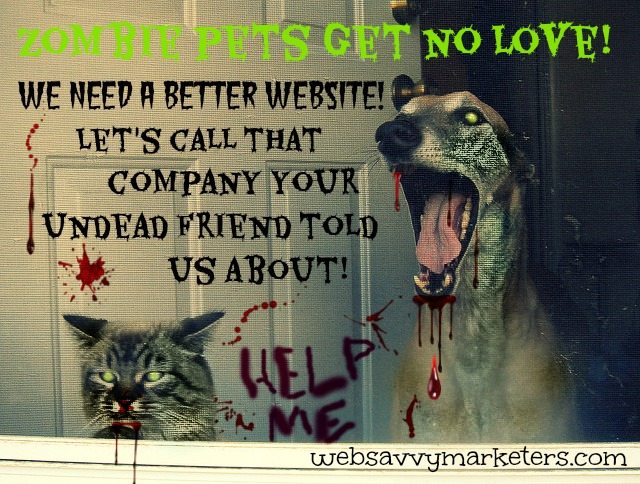
And don’t forget about zombie pets, please, because you never know when a zombie apocalypse will hit.

Flickr Creative Commons photo by Rob!


Filed Under: Kacee's Posts, Marketing, Social Media

Mark-up Your Website With Rich Snippets for Better SEO

October 9, 2013 Beth Devine

Wordpress plugins for simple website mark-upWhen you hear about mark-up for a website and you instantly think “code,” you’re only partly right. Maybe even mostly right. Because this whole rich snippet mark-up process means helping search engines to understand the content in your HTML, while still keeping it user-friendly for us humans.

This extra bit of text that appears under search results is a very good thing for search engine ranking and your website SEO.

There’s hope, however, for anyone who dreads HTML code like it’s a giant, eight-legged arachnid. If you want a rich snippet mark-up for better search results without the hassle of code, read on.

WordPress Plugins for Simple Rich Snippet Mark-up

Google has adopted the schema.org method of mark-up for websites, which is a structured data standard of microdata for search engines to make sense of . For example, if you write a review, and you mark-up your website with schema, you’re teaching the search engines not only about the item you reviewed, but also that it was you specifically that reviewed it.

If you have a website or blog that could benefit from mark-up for a person, product, event, organization, movie, book, or review, then an easy way to do this is with Schema-creator.org.

This site helps you create a schema, or code. Then you take this schema code and copy and paste it to your site. Super simple, right? But what if your content doesn’t fall into any of those categories?

If you have an in-depth article then you’re in luck, because a new WordPress plugin was created to qualify your content for Google’s new In-Depth Article search results feature. (To learn more about this, check out Google’s Webmaster Tools on In-depth Articles.) By using the new In-Depth Articles Generator, your site will be automatically marked-up with metadata to better present your in-depth content as a potential candidate for this new rating.

If you’re still looking for options, there are two other WordPress plugins, All in One Schema.org Rich Snippets and Schema Creator by Raven. Both are limited in the item types you can choose from, but they are by far the quickest and easiest way, and there’s no eight-legged code spiders to worry about.

Rich Snippet Mark-up for Newbies

Finally, and perhaps the simplest way to mark-up your site with rich snippets is with Yoast’s WordPress SEO. For every post and page you generate, it gives you the option of creating a rich snippet. Although it doesn’t use microdata like schema.org, the word is – so far – that Google will continue to accept other forms for rich snippet mark-up.

For ranking purposes in search engine results, decide which way you will mark-up your website and gain some SEO advantage. This isn’t mark-up magic. It’s real and it’s going to affect your website.

Code spiders, on the other hand, aren’t real. In case you were worried.


Filed Under: Kacee's Posts, Marketing, Search Engine Optimization (SEO), Tips for a good website, Tools & Tips

Building Links to Your Website With People Skills: 5 Simple Ideas

October 2, 2013 Beth Devine


building links with people skillsBuilding links for better SEO is like building relationships with people. Remember, websites don’t offer links. It’s the people who decide what to publish who give you links to your site.

Use your people skills when building links to your website with these 5 simple ideas.

1.  Network with other experts.

Find the experts in your industry through networking and see if you can interview them. This will attract readers and build your credibility. Attend events or host your own event to create link-building opportunities.

Try Followerwonk to find other people through searching Twitter bios or comparing competitor accounts to find new users to follow or target. Interview an expert you meet online, or a prominent blogger in your field.

2. Volunteer and sponsor in your community.

One of the best ways to build links is by reaching out and helping others. The traditional notion of “giving is receiving” works the same way with building links. Often your efforts will be rewarded with link back if sponsors or volunteers are listed on the website.

Local event sponsorships are typically affordable, and they will give more direct exposure than a larger, more costly event.

Think out of the box and garner a press mention for your ingenuity. The sky’s the limit with what you can do to interface and help out. Just being at the event as a volunteer is a form of networking.

Consider speaking at local high school and colleges where industry professionals are generally sought as career opportunity contact for an industry. A student organization that’s related to your field is another setting where your efforts in building relationships could develop into something even beyond a link.

3. Join an organization or club.

By joining the local Chamber of Commerce and the Better Business Bureau, your membership will develop a link back to you. Submit your website to relevant government sites in your city and state. Don’t forget asking your library as well!

These high-quality links generate traffic and authority, telling Google you’re a trustworthy source.

4.  Social media and relationship building.

Building links through social media is another way to syndicate your blog posts with the right people. You can use Followerwonk or Klout for Twitter, or use Muck Rack for finding journalists.

Search boards or pins on Pinterest to find relevant people, and on LinkedIn you can filter out by adding a specific geographic location in your search. Twitterfeed will feed your blog content to Facebook, Twitter, and LinkedIn automatically.

For more opportunities for link-building, look into Digg, which measures stories with “diggs” of approval (or buries it in disapproval) or Delicious.com, a great link-saving and link-discovering tool.

Blogdash is an excellent way to build relationships with other bloggers, as well as promote your product or service.

5. Create and curate with links.

 When you give  attribution, links back, and credit to someone else’s work, you are contributing to the sharing economy. Beyond just sharing the content, we are sharing our endorsements as well as our audiences.

Sometimes, this kind of content curation can smile back at you with another share, linking back to your efforts, as it did here:

Big Thanks to @KaCeeAngels for her awesome content curation with a blog piece I did a few weeks ago. http://t.co/Sb35HMw5

— Kaboomis Copy (@KaboomisCopy) February 8, 2013


Bonus Tip:

Know where you’re being linked.

Part of building links is knowing where you are being linked. Set a Google alert for your company name to receive alerts for whenever it’s mentioned online. This way you can also tell if your name doesn’t have a link. This might be an opportunity to request that one be added.

If you’re still hungry for more ways to build links, this post by Jon Cooper lists some wildly creative link-building ideas. One of my favorite is the billboard hoax submitted by Kane Jamison, proving you can have fun and still build links.

Filed Under: Kacee's Posts, Marketing, Search Engine Optimization (SEO)

5 Easy Ways to Build Links to Your Blog (With the Help of Dr. Seuss)

September 27, 2013 Beth Devine

Dr. SeussWhen you build links to your blog, it requires a dose of common sense, rather like that of a Dr. Seuss chant: “You have brains in your head. You have feet in your shoes. You can build yourself any link that you choose.”

That sort of chant. Fortunately, you’re not on your own. And you can know what they know. And you are the one who’ll decide where to go.

There goes the chant again. It’s so simple, and it works.

Have a go with these 5 easy ways to build links to your blog, content marketing’s best friend.

1. Create everlasting content with an evergreen post

Consistently writing a quality blog not only creates content that will drive traffic to your website. It’s a steady way to organically generate inbound links as people naturally want to link to your valuable posts.

One evergreen blog post – one that is sustainable for years, like the tree of the same name – could mean years of people linking to its still relevant content. A blog post that retains its value over time can include how-to posts, definition posts (a beginner’s guide to something), top lists, or opinionated posts.

When you determine which posts fit into this category (through Google analytics, for example), try option #5 to further the reach and link-building potential of these posts.

2.  Make an RSS Feed for your blog

Be sure to set up an RSS feed for your blog so people can easily syndicate your blog posts, which allows for more potential attribution links back to your website. If you’re unsure what your RSS feed is, try Google’s RSS Subscription Extension in the Chrome browser.

Consider syndicating your blog with other sites. Syndication is where you let certain sites that use content with proper attribution to publish your posts, giving you inbound links and free publicity.

Try this excellent Google syndication tip for more ideas on syndicating your awesome blog and building links.

basic story elements3. Tell a story

When you rock your readers with a story, they are more likely to want to share it with others, spreading the love of your link. Sparking emotion with a story is a way to communicate your message and be remembered.

Dr. Seuss not only chants an uncomplicated story line, he can teach you the elements to a story merely by following along. The Dr. Seuss Hat Map for sketching out your idea won’t let you down either.

4.  Great content ideas

Write a book review, take a survey, do a case study, broadcast a webinar, or create free tools or templates to share.

Offer any of these as free information to boost your traffic and build links when people link to it and share it with others.  It’s always a good thing when you give away information that increases your authority and trustworthiness.

In addition, the author of the book or the subject of the study will often be glad to include a link to your work.

5.  Repurpose old content

Use your old blog posts to create new content that will generate more links for the same, original post.

 It’s hard to continually come up with a new ideas and write awesome content, so try to repurpose it by making it into a PDF that you can then post onto Scribd or Docstoc. Take a how-to post and submit it to eHow. If you haven’t already, upload your videos to YouTube and Vimeo for a wider audience and link appeal.

If you’re willing to delve deeper into link-building strategies, check out Jon Cooper’s comprehensive list of link building strategies. You’ll never be bored again, and your link-building will keep you busy pretty much forever.

If you just want to have some fun in Seussville.com, then take a break and find some chants of your own. Maybe a link-building idea will be born. Do let me know!

Thanks to Laura Candler for her terrific Dr. Seuss Hat Map!

Filed Under: Kacee's Posts, Marketing, Search Engine Optimization (SEO), Tips for a good website, Tools & Tips

Improve Your WordPress Site’s SEO With a Single URL

September 24, 2013 Beth Devine

splitidentityPINI bet you didn’t know your website has two identities, did you? That even now, people are confusing you with another similar, yet technically different site?

Here’s how to avoid a Dr. Jekyll and Mr. Hyde condition that weakens your SEO.

Searching for your website can involve looking for two different URLs. For instance, you could search for http://example.com or http://www.example.com. These are two distinct URLs, and if people are using both, your website’s SEO strength is being split into two parts.

This means your website’s two-faced identity is causing it to rank less since it has to share its ranking with its split personality. To get your SEO back to a single URL page, you need to set a canonical URL.

Canonical URL and 301 Redirect for SEO

When you set a canonical URL, all the versions of your site will be consolidated into one URL, regardless of how people search for it. Now search engines will know which URL to direct the viewer to.

Next, you have to set up a 301 permanent redirect. This will assure that viewers will always be redirected to your site, and Google recognizes that this is the site you have chosen for your domain. No more split personality!

Follow these steps to set your canonical URL and redirect your site to one permanent URL:

1. Choose the URL you want.

How do you have your website printed on business cards? Either way, it might be preferable to have a shorter site URL. In addition, it’s becoming less likely to see sites with http://www.example.com. The “www” is often considered as redundant.

2. Verify your site with Google.

You will need to verify both your sites at Google Webmaster Tools. Both the “www” and “non-www” versions must be verified before you can do the next step.

  • Sign into Google Webmaster Tools with your Google account. (If you’re signed into Chrome, type in Webmaster Tools in Google search and you will be directed there.)

  • Click Add a site in right upper corner.

  • Enter the URL of the unverified site by typing in the entire URL. (If neither site is verified, go to the Google verification page for options.)

  • Click Continue and you will see the Site verification page.

  • Pick the verification you want and follow the directions.

3.  Now you can specify your preferred URL

  • Click on the site you want to be your preferred site from the Webmaster Tools home page.

  • Click the gear icon and then click Site Settings.

  • Select which option you want your site to display as under Preferred domain.

  • Under Crawl rate keep the recommended “Let Google optimize for my site.”

4.  Go to cPanel to make a 301 permanent redirect

Remember, you want to redirect traffic from the URL you didn’t choose to the URL you selected as your preferred domain.

  • Go to cPanel. If you don’t know how to do this, see my post How to Change Your WordPress Username for directions.

  • Go to the section titled Domains and click on Redirects.

  • The type should say Permanent (301)

  • Change All Public Domains to the site you are redirecting.

  • In redirects type the site you chose as your preferred URL.

  • Select only redirect with www. (If you are changing your site from an old one to a new one with a different name, you might want to include “redirect with or without www.”)

5.  Validate your site’s permanent redirection

  • At the bottom of the cPanel Redirects screen it should now show your current redirects.

  • Open a new browser and type in the URL that you’re redirecting to see if it takes you to your site.

The other way to do a 301 redirect involves editing actual code. While I’ve taught myself basic code, I prefer to avoid situations where the power to code is a danger. However, you may wish to use htaccess file for your 301 redirects.

Enjoy your newfound unified URL and improved SEO!

Filed Under: Kacee's Posts, Marketing, Search Engine Optimization (SEO), Tips for a good website, Tools & Tips

Why You Should Take Social Media Security Seriously

September 4, 2013 Beth Devine

key to the kingdom
Flickr photo from william.neuheisel

Giving someone else the control of running your business’s Facebook page, Twitter account, or YouTube channel seems like a good idea when you’re too busy to manage your social media marketing.

Yet isn’t it an oxymoron to say you’ve handed over the reins of control to your social media platforms? You don’t own the platform or the content you post on the platform in the first place. How much worse could it get?

It’s true, you relinquish a measure of control when you market yourself on someone else’s site like Facebook, but that doesn’t mean you should forgo basic social media security.

Hold the Reins of Control

Handing over the reins of his business Facebook page, our client witnessed the growth of a reasonable audience and marketing presence. What he didn’t realize then was how quickly things would rear out of control.

The employee who was given control of the social media was eventually fired. The business owner who had been happily running his business up to that point was now left with no idea how to regain control of his Facebook page.

He didn’t know the password or email to access his business’s Facebook account. Worse, he worried over potential retribution of the fired employee who wielded the power to hijack the account.

You know what they say about payback, and it’s not a beach.

Social Media Hijacking

It happened to international media retailer HMV last January. Recent layoffs and alleged mismanagement led the frustrated social media manager to retaliate with a hijacked social media rampage.

HMV management didn’t know how to shut down the account because when they handed over the reins, they forgot to keep the master key.

Don’ t let this happen to you. Take these simple precautions to avoid a social media hijacking:

Keep the Keys to the Kingdom

Create the passwords and company email used for social media accounts. Don’t let social media managers do this. Limit and document who has password access.

Treat security of your social media sites the same as you would for your company website and any zombie hack threats.

Using a business-grade social media management system such as Hootsuite will allow employees to log in with the same username and password as their employee email, giving a straighforward accountability.

One Key to Rule Them All

Using a social media management system will also allow you to consolidate all social media accounts into one secure system. From this one interface, your social media managers can publish to multiple profiles on LinkedIn, Facebook, Twitter, and other accounts.

You can also set your management system so certain employees have limited permission to draft social messaging before approved and published.

However you choose to manage your social media, know who’s in charge and with what information. Create a folder, a file, or a simple index card, and keep it safe. Sometimes you have to write certain passwords somewhere.

Issue a Training Manifesto

Anyone who has access to social media should be trained in security and compliance issues.

Be sure to teach them the basic expectations for your social media engagement. Set a foundation for what you wish to accomplish.

Holding the master key to your social media accounts means taking the responsibility seriously. Your social media presence is yours to protect.

Filed Under: Facebook, Kacee's Posts, Marketing, Social Media

Are You a Social Media Wallflower?

August 29, 2013 Beth Devine

Get off the wallIf you’re worried about being a social media wallflower, anxious that your online social skills come up short, then it’s time to get off the wall.

Learn how to step into the spotlight of social media storytelling and deadhead your wallflower days forever.

The New World of Social Media Storytelling Wants You

You don’t have to be boring and unpopular. With storytelling and “emotional” sharing, you can unveil the soul and spirit of your business through social media.

The 5 Emotions That Get More Shares

There are five emotions that are most likely to motivate people to share:

1. Awe
2. Surprise
3. Amusement
4. Anxiety
5. Anger

Because positive emotions are more likely to be shared than negative, promoting awe, surprise, and amusement are safe bets in increasing social media shares and interaction. Using anxiety-producing or anger-inducing stories can also be effective when they are used to promote social togetherness.

Like telling a story, sharing to promote social community allows people to feel connected to others and to something outside themselves.

The more emotion your story inspires, the more likely people will notice you and let others in on your story.

Social Media is a Giant Graffiti Wall

Look at social media as one giant wall of graffiti. The best graffiti will be the ones that stir the most emotions and cause us to feel the most united in a common cause.

This is also part of what’s known at the “herd mentality.” When it’s obvious others are actively engaged in sharing something, others will follow suit. Let’s face it, our digital-age society relies on the collective opinions of others to make decisions.

The More They “Like” You, the More You Will be Liked

“Is something popular because it is actually good, or is it popular just because it is popular?” The mass-approval syndrome was measured in a study on a news website to investigate how positive votes or likes influenced the overall rating of a social share.

It turns out that by earning a positive vote initially, more positive votes would follow. A negative vote didn’t make a difference. If anything, an initial negative vote would prompt follow-up positive votes and end up measuring the same as the control group.

So marketing a message will be more successful if you can lead the pack with a positive vote by someone.

Leading the Pack With a Good Story

Telling your story and getting others to like and re-share not only involves sparking an emotional reaction. It also means communicating a message with traditional storytelling features.

Who’s the hero of the story? What is the plot? The setting? And don’t forget the inevitable and necessary story conflict. Apple computer’s “1984” video tells a story steeped in conflict, brazenly marketing its original thinking.

Who’s leading the pack in this story? Don’t be afraid of introducing conflict into your storyline to inspire emotion and social communion. Get off the wall and get noticed. Dig into your archives, your creative reserves, and your inner bard. There’s a story in there somewhere.

Filed Under: Internet Marketing 101, Kacee's Posts, Marketing, Social Media

  • « Previous Page
  • 1
  • …
  • 3
  • 4
  • 5
  • 6
  • 7
  • …
  • 9
  • Next Page »

Recent Posts

  • Blindly Embracing Technology
  • Improve Productivity, Save Energy and Reduce Waste!
  • Youth vs Experience – What’s the Best Marketing Approach?
  • Second Chance Hiring is the Most Untapped Talent Pipeline
  • Do Your Consultants Treat Your Business Like Their Own?

Search this site

Call Us

860-432-8756

Our Location

222 Pitkin Street, Suite 125
East Hartford, CT 06108
Phone: 860-432-8756

Services

  • Marketing Services
  • Strategic Planning
  • Internet Marketing
  • Multi-Media Productions
  • Marketing Programs

Talk to Us

Follow us, subscribe to us, email us, or call us at 860-432-8756. We’ll use our Super Savvy Tool Belt to stay in touch however you prefer.

  • Email
  • Facebook
  • LinkedIn
  • Pinterest
  • Twitter
Sign Up for Email Updates
For Email Marketing you can trust.

Copyright © 2026 Web Savvy Marketers, LLC · 222 Pitkin Street, Ste. 125 · East Hartford, CT 06108 · 860-432-8756 ·
Privacy Policy | Terms & Conditions | Cookie Policy · Log in