Web Savvy Marketers

  • About
  • Services
    • Strategic Planning
    • Marketing Programs
    • Full-Service Web Design and Development
    • Content Marketing
  • Industry
  • Portfolio
  • Blog
    • Tools & Tips
      • Google Tips
      • Internet Scams
      • Motivational
      • Tips for a good website
      • Website Writing Tips
    • Marketing
      • Internet Marketing 101
      • Philanthropy
      • Search Engine Optimization (SEO)
      • Social Media
      • Web design/Internet Marketing
    • Web Design
      • E-commerce
      • Website Maintenance
  • Contact Us

Don’t Let Jargon Be a Communication Barrier

June 26, 2014 Beth Devine

jargonCommunicating effectively with your customers is essential if you want to build relationships. But there are many things that can be a barrier to communication.

Speaking the same language doesn’t mean there won’t be communication barriers. Foreign accents, cultural barriers, and the use of slang can all work to prevent clear communication.

Once while visiting Glasgow, I was completely unable to interpret what a sales clerk was saying to me. After asking for him to repeat it twice, I gave up in embarrassment.

Outside of the uncomfortable dialect issue, you expect to understand someone when you speak the same language. Unfortunately, this isn’t true. One of the biggest communication barriers – and one that’s easily avoided – is the use of jargon.

Jargon words are meant to enhance communication by simplifying a particular concept. This works when everyone involved in the conversation is aware of the word’s meaning.

When Jargon Doesn’t Work

To someone who isn’t clued in, however, it can be seen as technical snobbery. At the very least, it can confuse the message so the recipient loses interest.

Jargon can waste time and money. When documents and emails take longer to read and to understand, people may grow frustrated. Time is wasted when unknown terms have to be explained or are interpreted incorrectly and result in errors of deciphering, which leads to errors in follow-up action.

Business opportunities may be lost, along with potential money-making possibilities, when jargon is misunderstood.

When Jargon Is Unavoidable

JargonThere is a good side to jargon. Jargon-philes are able to share their new techno-terms with ease amongst their fellow professionals. As new concepts and ideas are developed, communities can quickly convey essential solutions and strategies with their jargony-sounding words.

The trick is to pay attention to your audience and minimize the use of jargon in content created for clients who don’t live, eat, and breathe the particular jargon-speak you do.

Because let’s face it, despite the diehards who wish to defend the English language and ban all jargon and buzzwords, we are not going to see an end to it. We love to manufacture words to convey meaning in our ever-expanding landscape of ideas and interests.

Jargon often ends up becoming a household term. Various communities use jargon that inevitably falls into common use, including technical, business, and military jargon.

The military deserves the award for having the greatest number of jargon terms. Some well known examples include “zero dark thirty,” or the early morning hours, “AWOL” and “MIA” to describe absent parties, and when something or someone is exceedingly difficult to deal with, “boot camp” is tacked on to describe its extreme nature.

Business jargon is another strong contender in jargonese. This Forbes list has terms you probably are unfamiliar with, but includes other buzzwords such as “drinking the Kool-Aid,” “outside-the-box,” and “scalability.”

Use Jargon Sparingly

Jargon-filled content can be risky. Jargon can hurt your SEO because users will search for terms that they are familiar with and reflect the way they speak. Jargon can also be boring. If you don’t understand something, you quickly lose interest.

When jargon serves a useful purpose, it can be on-point in its message. Use jargon wisely when you communicate and help your audience out by demystifying anything that might be unclear.

When in doubt, leave it out. Save your showing off for karaoke nights and Facebook status updates.
Filed Under: Kacee's Posts, Marketing, Website Writing Tips

Why Color Matters In Your Marketing Decisions

May 28, 2014 Beth Devine

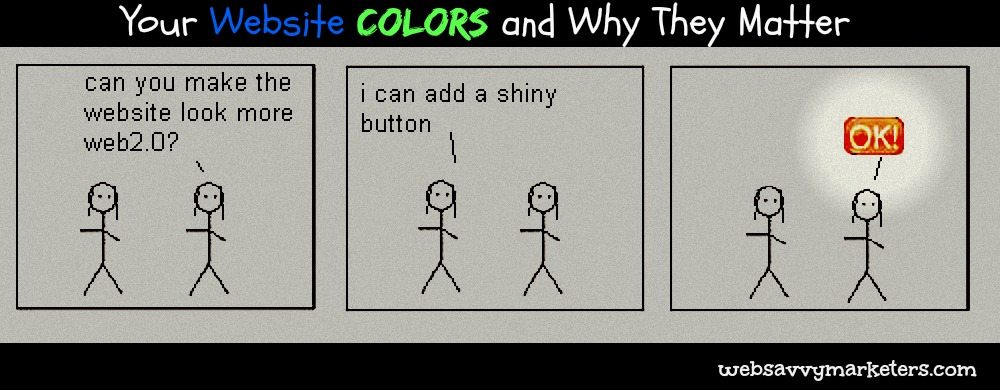
Why color mattersThis image is a derivative of web 2.0 by tyger_lyllie, licensed under CC BY.

What matters most when you make a marketing decision? Science shows that the visual has more impact on people than any of our other senses.

While the visuals of design, power words, and your main image all influence online behavior, your marketing decisions on color matters in how you are perceived.

What are the messages you are sending with your website colors? Are you taking advantage of the full effect of colors? A well-chosen color scheme can give your brand a unique message and convey the right emotions.

Want to know what colors mean to you compared to over 30,000 other responses? Take the color survey to find out.

Color is a key factor in brand recognition

Some of the most recognizable brands rely on color. Check out the power of color on this website and see how well you can identify brands by viewing a small section of their logo.

As this recognizable brand test demonstrates, brand recognition is often color dependent. Recognition can increase by up to 80% through the use of color, according to a much-touted University of Loyola, Maryland study.

Not only that, but brands are growing increasingly color-centric in their identity. Consider the red signature sole of Louboutin. Louboutin filed a trademark infringement claim against Yves Saint Laurent, who dared to use the red sole in their shoes that Louboutin claimed was their visual identity.

Louboutin was unsuccessful in this case, but others have been able to register a color as a trademark. Here’s a link for a list of currently registered trademarks.

Color increases memory

Studies show that pictures with natural colors, or “living colors” are more appealing and are more easily remembered than black and white. Compared to the colors of nature, falsely colored scenes did not improve memory.

“Perhaps designers should be aware that, in order to engage or grab one’s attention (as in advertising), bright colors might well be most suitable,” Felix A. Wichmann said, author of “The Contributions of Color to Recognition Memory for Natural Scenes.”

“If, on the other hand, the aim is more to have an image ‘stick’ in the viewer’s memory, unnatural colors may not be suitable.”

Color has meaning

Color has significant and unique meaning based on cultural, historical, and natural elements. Our perceptions of a color are based on how we have experienced it.

Red is seen as signaling danger, anger, and love. As the color of blood and fire, it was also extremely hard to come by. Ironically, much of the dye used to make red still comes from the cochineal beetle.

Red is one of the top two favorite colors, and is in three-quarters of the world’s flags. All languages have a word for black and white, with red the next color to exist.

The color green is now also a verb. It is intrinsically linked to nature, rebirth, and ecology. There are more shades of green than any other color.

Green is used to describe our moods. If you are nauseated, you are green around the gills. When you’re jealous, you’re green with envy, and when you’re green behind the ears, you are showing your immaturity.

Blue rates as the favorite color for all people. It’s the most common color in corporate branding and is associated with peace, denim, and trust.

It is also the $80 million color that Bing chose for its call-to-action links, making it a similarly colored blue to Google’s shade of blue.

Blue has its share of expressions, including blue laws, blue bloods, blue streak, blue book, and true blue. Without blue and all its varied meanings, we would most assuredly be singing the blues.

The colors of various brands can tell us a lot about what they wished to convey, as this chart shows:

Color Emotion Guide

Explore more visuals like this one.

Color choice can impact participation

The button color test has long been a way to see what color influences participation. What they found out might surprise you.

The colors red and green were selected. Red, as we’ve seen, connotes passion, and it is associated with “stop” as well as warning. Green, on the other hand, generally means “go” and points to nature and the environment. It is also the color most used for buttons on websites.

The test showed the red button won over the green button by 21%. While you shouldn’t go out and change your button colors, it’s not a bad idea to test your button colors with your audience and your website to see what the results are.

Color and gender preference

The True Colors survey says that blue ranks #1 for both males and females. Purple doesn’t rank at all with males, but it’s the second favorite color for females.

For least favorite colors, the genders are more similar, with both choosing brown and orange, although in different ranking order.

“Men keep it simple” couldn’t be more accurate. Woman give more names to color variants, allowing for grape, plum, or eggplant for purple, while men like to call purple by its name, not some fruit. (Yes, eggplant is a fruit.)

Men are also more likely to be color blind. Approximately 1 in 12 men and 1 in 20 women are affected by color blindness.

Color blindness is a color vision deficiency that is most common in a red/green deficiency. This means that people will mix up all colors that have some red or green as part of the whole color. For example, a color blind person will be unable to see the difference between blue and purple.

Vischeck simulates what color blind vision is, as well as offers a way to correct images for color blind viewers.

Choose your colors with this information in mind so you can show your true colors with confidence.

Filed Under: Kacee's Posts, Marketing, Tips for a good website, Web Design

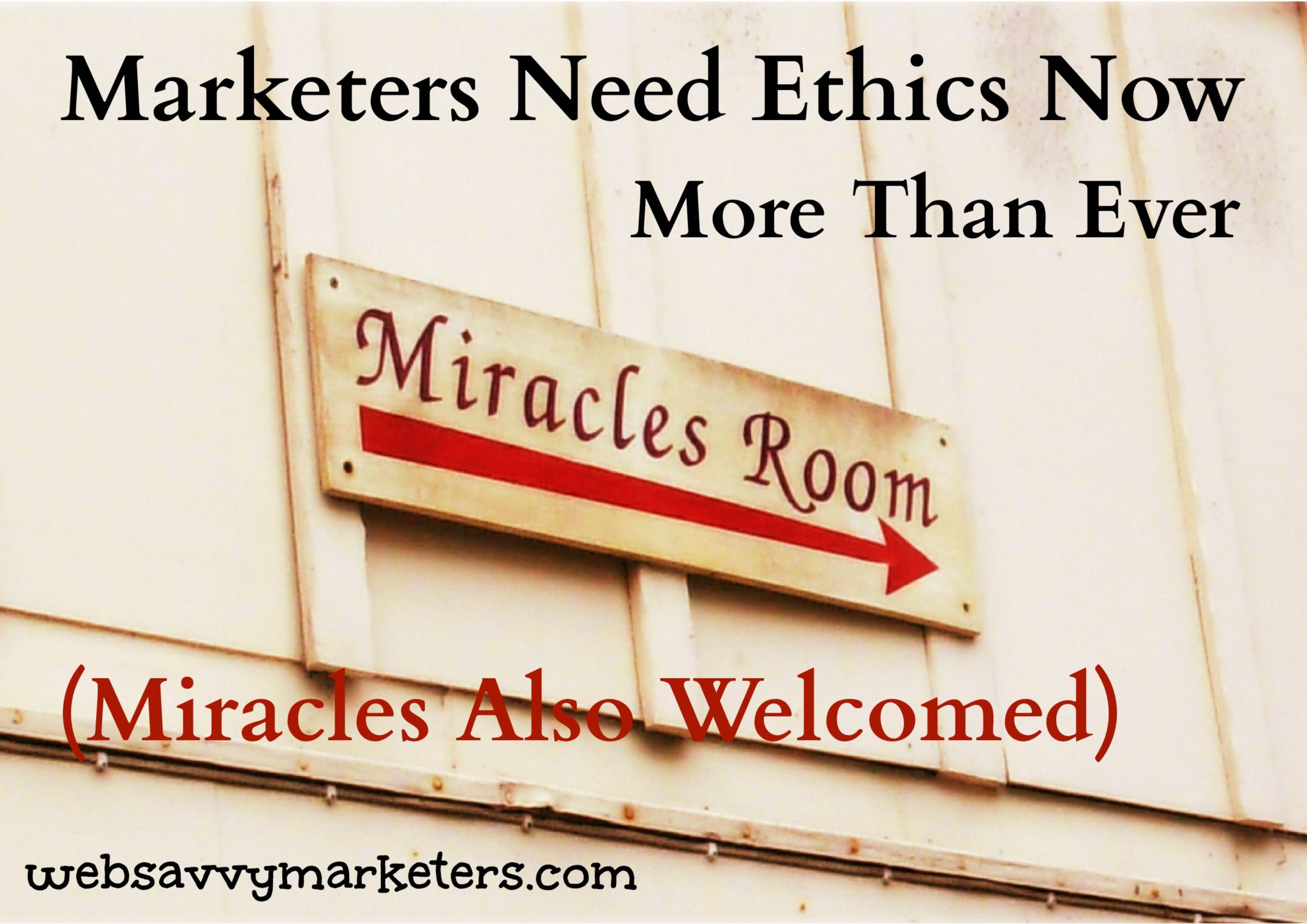
Marketers Need Ethics Now More Than Ever

May 16, 2014 Beth Devine

marketers need ethicsTransparency in marketing is absolutely necessary in today’s world of social media. But is it really possible to have marketing ethics?

The American Marketing Association outlines its statement of ethics with the core values of honesty, responsibility, fairness, respect, transparency, and citizenship. This is how you build relationships. This is how you enhance consumer confidence.

Is a miracle is required for marketers to make this happen?

Will brands still try to wiggle out of these high standards of marketing ethics when social media accountability looms over every marketer’s head? Is there room to have a personal opinion as a marketer or business owner when even secret recordings revealed to the world can herald your demise?

“Thou shalt have no other gods in advertising but truth,” agreed the Associated Advertising Club in 1911 as its first rule in The Ten Commandments in Advertising.

Target’s Chief Marketing Officer Jeff Jones applied this rule of truth when Gawker published an anonymous rant by an employee.  By being willing to admit the company’s failings, he tried for transparency and optimism in his letter of response, The Truth Hurts.

The best of the ten commandments gets more specific with number seven. “Thou shalt not lie, misstate, exaggerate, misrepresent, nor conceal; thou shalt not bear false witness to the public, but thou shalt be fair to thy merchandise.”

Can we expect fairness and truth online from the public sphere of marketing and advertising or allow a Wild West of order? And where do you draw the line when companies are beginning to think of themselves as publishers of information?

The shift from hawking products and services to providing valuable content and engaging on social media should mean more listening and better service from marketers. All the new channels of communication allow companies to reach their audience better and give their audience the access that they desire.

It also allows brands more wiggle room.

How can marketers stay within the lines of ethical standards when so much is demanded of them? What are some benchmarks marketers can use to establish marketing ethics?

Here are some basic rules to follow for a business as well as a public profile:

1. Avoid all defamatory or libelous comments.

Since you are legally responsible for anything said by you or your business, be careful to avoid all statements that could damage someone’s reputation. Because businesses are now able to act as a media channel, the same rules that journalists should follow apply to a business.

The greater your public profile, the harder you can fall. Anything posted on social media applies.

2. Stay away from controversial topics like politics and religion.

If there’s anything that’s guaranteed to put your brand in hot water, it’s taking a stand in a political or religious debate. Social media is meant to give a business a personal context, but these subjects have the potential to offend and alienate people.

So unless you want that kind of spotlight on you, avoid it like the plague.

3. Know and follow the rules for each social media network.

It’s always wise to understand the terms of service for the information that’s posted on a social media site. For instance, Facebook’s terms of service states that for all content covered by intellectual property rights – like photos and videos – you grant “a non-exclusive, transferable, sub-licensable, royalty-free, worldwide license to use any IP content that you post on or in connection with Facebook.”

Twitter’s rules includes permanent suspension of accounts with updates that consist mainly of links and not personal updates, posting duplicate content over multiple accounts, or multiple duplicate updates on one account.

4. Show professionalism.

Merriam-Webster defines professionalism as “the skill, good judgment, and polite behavior that is expected from a person who is trained to do a job well.”

The best way to stay on the safe side of the ethical boundary line is to say things online that you would be agreeable to saying aloud at a client meeting or sharing with everyone at an important public event.

When Benchmark responded to a dissatisfied customer’s tweet, a representative exhibited the opposite of professionalism, and even demanded that the customer be more professional! Worse, she made a thinly veiled threat to the customer’s future career. Benchmark recovered quickly with all the appropriate, professional actions.

5. Be truthful.

Eventually deceptive content will come back to bite you. People will realize the deception, grow dissatisfied with their product or service, and they will vent their dissatisfaction on social media. Negative word-of-mouth takes on new meaning when it’s given an audience of potentially thousands online.

Studies show that 70% of consumers trust brand recommendations from friends. This same authority can be used against a company on social media when it is less than authentic.

6. Play fair.

As this letter to the marketing industry points out, marketers can wield a mighty sword with their emotional tactics. Like telling lies, a brand’s lack of fairness will come to light sooner or later. People won’t stand for being tricked and manipulated.

Begin by offering a quality product or service that you believe in. Then observe Seth Godin’s philosophy on the good guys: “Individuals and organizations that can compete on generosity and fairness repeatedly defeat those that only do it grudgingly.”

Online accountability is ultimately a positive force, and technological advancements in cyber communication will encourage businesses to make decisions that reflect ethical standards.

Transparency may not be easy, but it doesn’t require a miracle either.

Filed Under: Internet Marketing 101, Kacee's Posts, Marketing

4 Steps to the Best Landing Pages

February 26, 2014 Beth Devine

four steps in selling processThe four steps to the best landing pages come with a history of attempted murder. Over a hundred years ago, E. St. Elmo Lewis, the creator of the original four steps, was twice targeted by an unknown suspect. First with arsenic, then with fire.

Being a successful businessman has its risks, after all.

Lewis devised the marketing acronym AIDA: Attention, Interest, Desire and Action; the four steps in the process of selling. For landing pages, specific elements are applied to these four steps to achieve one objective.

A landing page can cause only one of five actions: to get your visitor to buy, register or sign up (which includes giving permission to follow up), click to visit a targeted page, learn something, or tell a friend.

Determine which of these five desired actions you want and stay focused on that one alone. Like a dog with its bone, don’t distract your readers with anything else.

1. Attention:

You have three seconds. Your visitors will choose to stay or go in this length of time, according to The Three Second Rule.

Convert your visitors toward your goal by attracting their attention with large font and captivating visuals. Make your landing page fertile ground by using web design that keeps the important elements above the fold, or in the visible screen without scrolling.

The three seconds begins with an attention-grabbing headline. Create a headline that matches the one from the place that drove your visitors to your landing page. This way your visitors will know they’re in the right place.

2. Interest:

Instead of talking about the features of your product or service, talk about how it will benefit your visitors. Maintain their interest by using “you” and “your” instead of “we.” This helps them to identify with what you’re offering.

Your design will communicate this with simple and clear elements, just like your copy. Try a one-column format that includes plenty of white space in the copy with small paragraphs and wide side margins.

There should be no more than five lines – not sentences – per paragraph. The first paragraph should be one to two lines. By varying the size of paragraphs, you make your copy easier to read.

Remember the dog and its bone. Keep the focus on one thing.

3. Desire:

How do you make your visitors want to buy, register, click, learn, or share? Answer this question: What do you want them to do?

When they land on your landing page, it should be clear what they’re being asked to do. Everything on the page is there to support the one goal you chose. Remove all distracting elements and visual clutter, including navigation bar, widgets, and extra links.

Don’t lose their interest by veering away from your chosen goal. Write copy that is absolutely clear, beginning with an eye-catching headline followed by the benefits.

Tell them why. When you include “because” you’re giving them a reason to choose your offer. Keep them on track. Everything on the page is steering the visitor to the next and last step.

4. Action:

This is a direct call to people to do what you called them there to do. There should be a minimum of two call to actions, unless the copy is long, then more is required.

Include a graphic button or hot-linked text that stands out. If your copy goes below the fold, then don’t neglect to include one there as well. Use direct writing on the buttons to encourage action. “Buy now,” “sign up free,” “get the ebook,” or “get started” make their expectations obvious.

Your landing page is a goal-oriented tool meant to accomplish one thing only. Stay single-minded. Don’t confuse it with your home page. Make it uncommonly good.

(There is one inconsistency with this post. I used a dog analogy instead of a cat. I hope it doesn’t throw anyone off too much.)

Filed Under: Kacee's Posts, Marketing, Web design/Internet Marketing

Learning Authority from Seth Godin, a Mom, and a Robbery

January 29, 2014 Beth Devine

online authoritySeth Godin recently wrote a guest post on Copyblogger about striving for authority. The comments were nearly as entertaining and informative as the post.

You would think no one would dare to question Godin, whose authority and credibility have been time-tested and proven. But since it’s the nature of humans to squabble and whine, even Godin, whose high moral ground is the beacon of light for marketers worldwide, will suffer from censure.

As one commenter complained, isn’t it obvious by now that in order to gain authority you must work for it? Why must we be reminded of this again and again?

Because we need it. Duh.

My mom used to tell me, “Don’t do as I do, do as I say.” Coming from a parent who has earned her authority, she wasn’t so worried about her credibility. Of course, that changed as I grew older and began to question that authority.

To be an authority online, what you do and what you say need to match up. Delivering your promises is more important now than ever with all the social media platforms that allow for public venting and finger-pointing.

When our house was broken into, the policeman who handled the case was unquestionably an authority. Like Godin pointed out, licensed authorities are obvious. What’s not so obvious is the potential to earn authority through acts of credibility.

This policeman earned his credibility when he showed that he was doing the hard work of searching for the perpetrator and supporting us. He also earned our trust. He might have been a figure of authority when he walked in, but he was a true model of law enforcement’s compassion and integrity when he left.

It didn’t matter that he never caught the burglar. What mattered is that we knew he cared due to his investment of time and effort with us as a family.

In describing his contes moreaux, or “moral tales” film series, director Eric Rohmer said, “What matters most is what they think about their behavior, rather than their behavior itself.”

What matters most is not what you do, but what you think, because that’s what’s going to become clear over time. Your behavior will come back to bite you if it’s not authentic. As Sonia Simone, Copyblogger co-founder, wrote in the comments, “Authority without credibility is called fraud.”

Derek Halpern makes a case for gaining instant credibility on his website, Social Triggers. Sounds gimmicky, I know. However, he gives three valid points that expand on what are well-known tactics: “Be honest” – by arguing against your own self-interests, “know your ish” – give accurate and precise information, and “don’t scam” – back your claims with evidence.

Halpern’s blunt personality and no-holds-barred approach make for an authentic online presence. If anything he does comes back to bite him, it’s surely not due to a lack of truth telling. (His How to Deal With Haters is my favorite. I know you’ll love it too.)

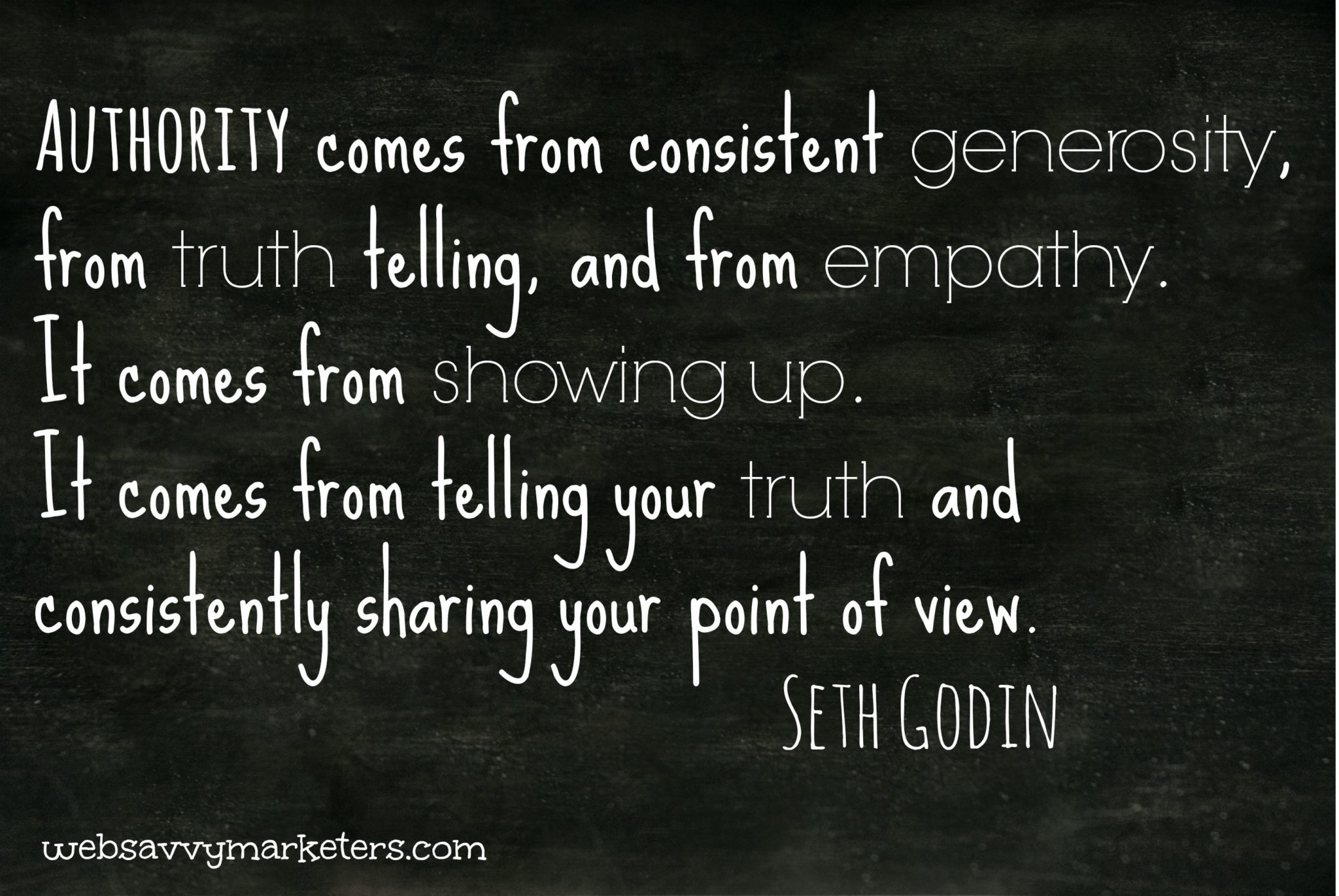
To be an authority, emulate the prototype. As Godin tells us, “Authority comes from consistent generosity, from truth telling, and from empathy. It comes from showing up. It comes from telling your truth and consistently sharing your point of view.”

Copyblogger’s founder Brian Clark summed up our inherent need for a beacon of light in Godin in a reply to a commenter, “It’s good to air these things out like the big dysfunctional family we are.”

Well said.

Filed Under: Kacee's Posts, Marketing, motivational

The Customer Experience Story is Remembered Long After the Logo

January 21, 2014 Beth Devine

customer experience storiesWe are all customers who’ve felt the sting of mistreatment at one time or another — the unfriendly or incompetent company representative who forced us into a stalemate of dislike because they didn’t follow the simple rules of engagement.

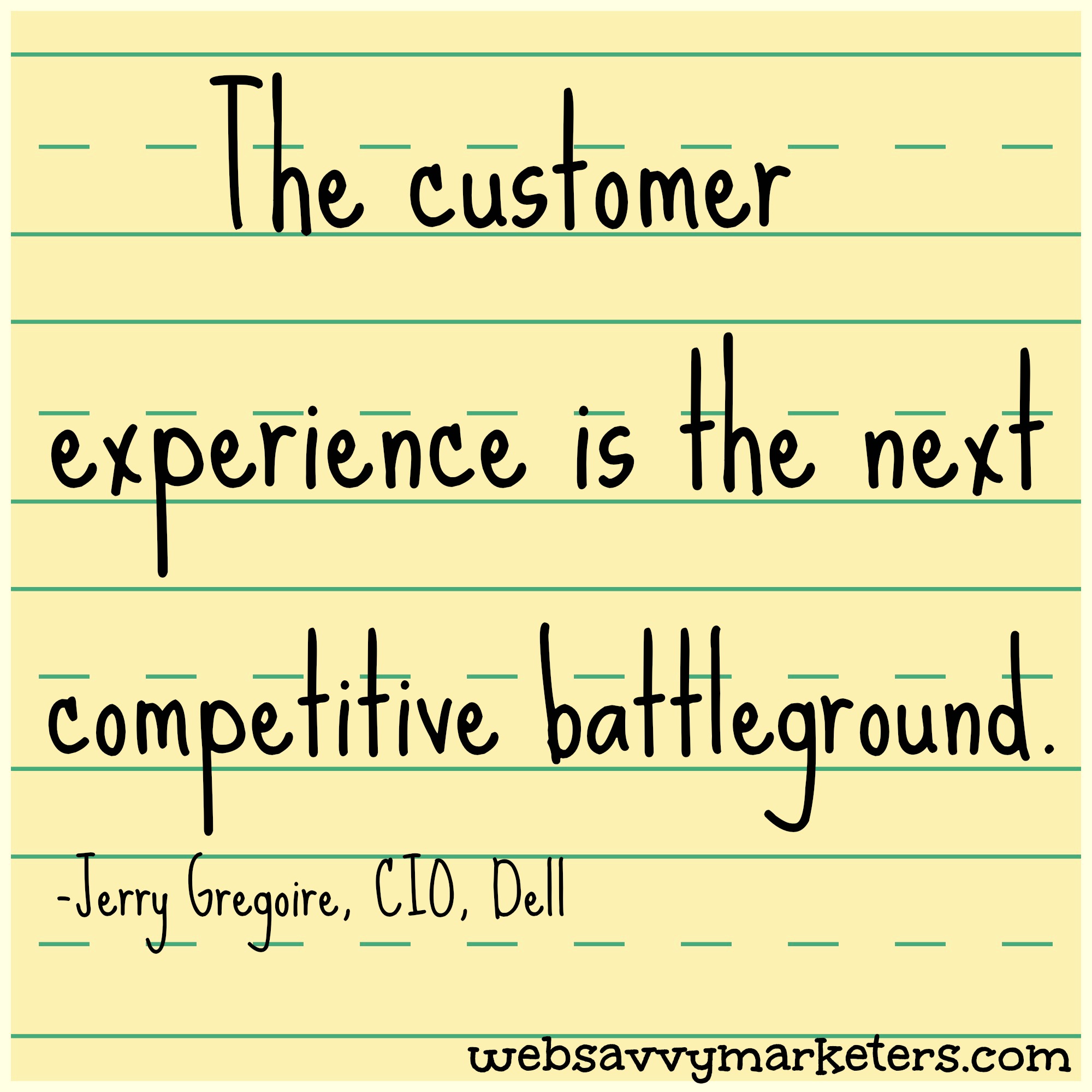
A customer’s experience will be remembered much longer than a company logo or product packaging. A customer’s experience becomes the brand’s story, and how it is told will determine a brand’s value.

Seth Godin’s definition of brand spells out the fundamentals: A brand is the set of expectations, memories, stories and relationships that, taken together, account for a consumer’s decision to choose one product or service over another. If the consumer (whether it’s a business, a buyer, a voter or a donor) doesn’t pay a premium, make a selection or spread the word, then no brand value exists for that consumer.  

Learn from the stories. These five customer experience stories include the rules of engagement needed to create a positive value exchange.

1. Be clear on the policy.

Every time you check out at Forever 21, you are reminded of their store policy with a simple question: “Do you know what our return policy is?”

It’s a simple formality, and it shows that Forever 21 wants customers to be aware before they walk out of the store. When you have only twenty-one days to return an item for store credit, it’s critical to make it clear.

A customer who knows the limitations and rules up front are less likely to complain. Sharing information as part of the transaction helps to cement the agreement.

2. Bend the rules.

The return policy isn’t so clear with Game Gear, but when you’re ordering online it’s up to the customer to read the fine print. Depending on the situation, sometimes the rules are meant to be broken.

If a customer believes they’re being listened to, they will remain satisfied. Allowing for a dialogue gives consumers the opportunity to share their experience, and it gives the brand the option to make exceptions to store policy.

In this case, a thirty-day return policy was difficult to comply with when holiday gift-giving requires additional waiting time. Game Gear’s quick response was to allow for the return, and included a happy ending with: “We are sorry for the inconvenience and hope we get the chance to make it right.”

There’s no better experience than a company who shows they are listening with a little rule bending.

3. Own up to your mistake.

A local Domino’s takes your daughter’s custom order, the same order they’ve filled for months, and tells you no, that’s not something we do.

Wait a minute. There’s no room for an unequivocal no when a customer requests something. There’s room for let me check on that for you, or can you give me more information, or I’m sorry, but that product is no longer offered.

The pizza in question – a gluten-free artisan style – was eventually made after further inquiry, but the mistake was never acknowledged. There wasn’t an apology of any kind.

There’s always room to “make it right” when a customer feels wronged, even if it means being in the wrong and saying so.

4. Sometimes you gotta take a loss.

When Shutterfly didn’t cancel a duplicate order, they charged me for both identical pillows. Despite speaking with three customer service representatives, the issue remained unresolved.

The employees that are hired to work with customers should be trained to fix the problem, and when they can’t, to follow a procedure that does get it fixed. Three failed attempts could mean strike, you’re out.

In this case, I had to ask to speak with a manager. Fortunately, this individual had the training to effectively manage an order gone terribly wrong. The end result was a free pillow for me, and a home run for the brand.

5. A company’s face should be a smiling one.

For years we were greeted at our dentist’s office with a grim-faced receptionist. As if going to the dentist isn’t bad enough, we had to deal with a cross between The Grinch and an evil minion from Despicable Me before getting past the front desk.

Hiring the right person to represent you at the front lines is a critical decision. Your goal is obvious: to welcome your visitors and make them feel wanted. You only choose someone with the stature of a squadron leader if you’re trying to prevent customers from entering.

No matter which side of the desk you’re on, life is much more pleasant when the rules of engagement are handled with a smile.

Filed Under: Kacee's Posts, Marketing, motivational

The 3 Social Media Giants (and What to Wear to Their Party)

January 15, 2014 Beth Devine

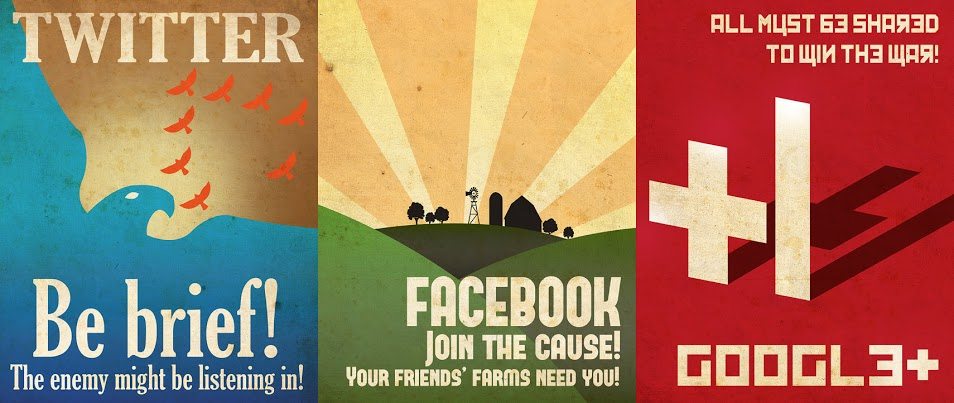
faces of social media
Artwork by Aaron Wood at Just One Scarf.

Once upon a time three giants, Facebook, Twitter, and Google+, were invited to a party. Because giants tend to take up a lot of space, they are naturally at odds with one another on the World Wide Web’s social media gathering.

You’ve heard the term “elbow room” before. These giants are accused of jostling for place while in line for the social media party, their enormous elbows knocking over innocent bystanders. Lying flat on their backs were LinkedIn, Pinterest, and Instagram, strong contenders for front-line passes.

Did you happen to see Tumblr, Vine, and Snapchat make a dive for the door? The party hasn’t even started, and it’s already a madhouse for those scrambling to make themselves known.

Worse still, party followers are arguing about who’s hipper: who’s the best-read, the best-dressed, and the best-selling. The question is clear for each of us who realize that we have to make an appearance at the grand social media affair.

Which party should you attend?

Facebook continues to be the place for friends in the real world to share, Twitter is where you reach out and find others of similar interests, while Google+ boasts a collaborative environment of engagement.

Wait, there’s more. Know how to party with the three social media giants (and what to wear) to avoid utter disaster.

The Dish on Google

As Mashable’s article “Sorry, Google, We Still Won’t Come to Your Party,”  scathingly points out, Google seems hell bound on getting users to sign up and engage. Their latest is forcing YouTube comments to be fodder for Google+. Not exactly a party-friendly invite.

The good news, however, is there’s no place like home in Google. Once there, your options are better than any other platform. From your Google headquarters, you’ve got Google +, Gmail, Google Drive, Google Docs, YouTube, Google Maps. Google Play, News, Calendar, and much more.

According to a Forbes article on social media trends for 2014, Google+ “has the second highest number of monthly users” (second to guess who, Facebook). It also reminds us of the ever-looming SEO fact: You either Google+ and rank, or you don’t.

It sounds like an invite you would be crazy to turn down. Dress code lines up with business casual, unless you’re just there to crash.

Facebook Party Faux Pas

Facebook continues to dominate the party with over a billion party goers, but its charm has its limits. Vaguebooking, an Urban Dictionary Word of the Day, is one of the many Facebook annoyances you must contend with when you enter the party’s fray.

Vaguebooking is a status update that’s intentionally vague and designed to elicit a response. In other words, let’s all have a pity party, folks.

Other top Facebook pet peeves include political rants (my personal top peeve), publicizing private moments, and the vanity post, a.k.a. “the selfie.” If you want to be TMI’d to death, Facebook is your party.

A dress code doesn’t exist, as far as I can tell.

Time is Short But Sweet on Twitter

The brevity of Twitter, combined with the capacity to integrate images into your Tweets, makes for a quick and smooth flight through party central. With the aid of Hootsuite or Tweetdeck, your Twitter soiree will be even less complicated.

You can add anyone you choose to follow, tweet to whomever you wish, and read Tweets from lists of favorites. The memorable Tweet, “Twitter makes me like people I’ve never met and Facebook makes me hate people I know in real life,” seems harsh. But it’s hard to argue the truth.

Dress code is what’s trending, same as the fast-paced, timely Tweets.

So Where’s the Party, Really?

The recent Pew Research survey on the top social media sites for 2013 shows that “73% of online adults now use a social networking site of some kind.” The top five in order are Facebook, LinkedIn, Pinterest, Twitter, and Instagram.

Google+ wasn’t included in the survey. It must be due to another harsh truth. Google+ is not simply coming to the party. Perhaps it is the party.

Filed Under: Kacee's Posts, Marketing, Social Media

Tell Your Story on Pinterest

January 8, 2014 Beth Devine

pinterestSocial media is the place to be if you want to be heard. When you share information and tell your story in images, you are communicating in the format that speaks the loudest.

According to a Searchmetrics ranking study, Pinterest pins play a role in SEO ranking. Seven out of the top eight SEO website ranking factors are social media related, with Pinterest coming in at number seven.

Sharing on Pinterest is getting easier as updates are made to accommodate certain pin types and the Pinterest audience continues to grow. Getting your pins repinned is a way to spread the word and communicate your unique brand on social media.

Here are eight ways to get your story heard on Pinterest, the social curation site for the inner magpie in all of us.

8 Pin Ideas to Tell Your Story on Pinterest

1. Slideshare Presentations

Slideshare is a popular place for searching for interesting content. It’s easy pin button gets your presentations pinned, with viewing only a click away, taking users to the Slideshare site.

An attention-grabbing first-page image captures the pin. Fill your Slideshare story with more entertaining and educational images, such as this pin for the SES Singapore 2013, a Slideshare presentation comparing teenage sex to content marketing.

2. Videos

YouTube and Vimeo videos allow you to easily pin and then watch directly from Pinterest. Pinterest pins for videos captures both the still image and the potential for deeper engagement with film viewing.

Vimeo pins for Nokia’s N8 mobile phone short film competition showcases its phone’s capabilities while reaching a broad audience. Check out a winner in Daniel, the story of a boy who fought WWII with his foresight.

3. Memes

The best memes include both a visual and simple text that makes a statement or represents an idea. Your boards can embody your brand’s spirit and values based on the memes you pin.

Web Savvy Marketers’ Cats With Blog Appeal board features various cat memes created for our blogs and other fabulous felines for your entertainment.

4. Articles

Pinterest recently updated its site to include an article format. Now when you pin a favorite article – a great way to save to read later – your pin showcases the article headline, a short descriptive blurb, and its site origin.

If you want to enable your articles for the new look, learn how to apply for “rich pins.” Get a feel for the updated article pin while learning How Humans Created Cats.

5. DIY

How-to pins continue to be popular, and Lowe’s has capitalized on the idea. Their Build It! board displays a wide range of do-it-yourself ideas and is a wonderful resource that invites the user to come and play.

Your DIY board can include a host of projects that indirectly relate to your product, as well as ideas that capture your brand’s message.

6. Product Pins

Like the new article pins, product pins also include pricing, availability, and where to buy – all updated every day. Etsy models the product pins well. Their products are well integrated into Pinterest, including their own DIY board to celebrate their artists’ craftiness.

Follow the application for rich pins to get yours.

7. Infographics

For a great way to summarize data on a specific topic, share infographics on your Pinterest boards. Not only will it supply hours worth of data in one place, it’s visually appealing.

An effective infographic is easy to read and follow. Best of all, it includes valuable information that tells a story. This social media superhero infographic is a story that’s changing, and like all stories, will need to be revised to stay current.

8. Repurpose Content

Pinterest is perfect for repurposing content from your blog posts, Facebook, Google+, and LinkedIn posts. Be creative in how you share your story across the social media platforms. Don’t simply repost everything in identical format.

Think about the big picture you are trying to present when you choose your pins and boards. Follow that theme and tell your story so that it’s interesting, entertaining, and informative.

Pinterest Pins Get Tagged

With the recent purchase of VisualGraph, an image-recognition startup, Pinterest will acquire a system for tagging the photos posted to its site. Automatically detecting image contents could help Pinterest target ads based on the pins of users, as well as improving a user’s search for a particular item.

This means finding you on Pinterest will get easier. Make your story known with a little Pinterest help.

Filed Under: Kacee's Posts, Marketing, Search Engine Optimization (SEO), Social Media

5 Things Cats Can Teach Us About Social Media Behavior

December 18, 2013 Beth Devine

social media behaviorLove ‘em or hate ‘em, the behavior of cats has a lot to tell us. Watching cats, or watching the ubiquitous cat videos, will teach us some basic “rules of paw” about social media behavior.

What do cats know about social media behavior? As it turns out, cats were born for the social spotlight. Why else would they agree to star in all the videos?

Let’s take a look and see what cats can teach us.

1. Cleanliness Arrives as the Grammar Police

Cats actively clean themselves with their incessant licking. As a result, they always look superb, and they smell fabulous too. In social media, this translates into keeping your posts clean and free of spelling and grammar mistakes.

More than 4 out of 10 people complained about spelling and grammar on brands’ social media sites, according to a U.K. consumer survey. This pet peeve exceeded consumer dislike for aggressive sales tactics, so be sure to proofread your social media posts.

2. It’s Not About You

Cats remind us with every chance they get that it’s not about you. The universe revolves around them, FYI. So take a cat’s lead and focus on your audience when you’re engaging in a conversation on social media.

Google+ +Post Ads are an example of how effective social media engagement is with the consumer starring in the leading role. The user directs the conversation, giving the brand the attention it craves when and how their fans want it done.

We must be poised to give a rub when a cat decides it’s ready for one – so must a brand be ready to respond to their audience.

3. Play Well With Others

Cats are on the job full time with kitty ninja play tactics, ready to play with anything you’ve got, even if it means resorting to playing with Christmas elf packing peanuts.

For social media behavior, cats teach us that having fun is important to generating shares and comments. While it’s critical to educate your audience, it’s equally valuable to entertain.

At the end of the day, for those who don’t know how to play well, ignore them. Ignore the vampires who are stalking you. As Seth Godin says, be the garlic to the vampires who feed on negativity. When they make nasty comments or send hostile messages, don’t fuel them with a response.

4. Curiosity Won’t Kill Your Results

If cats weren’t curious, they would lose an essential element to their character. How else will cats change the world if it weren’t for their curiosity?

In order to be sure you are effective on social media, be curious like a cat and be active on multiple social media networks. According to this Wildfireapp infographic, greater success means engaging on 5 different social media platforms.

Having a curious nature will get your name out there, widening your social stratosphere and giving you greater feedback.

5. Loyalty Means Getting Fed

Speaking of feedback, cat loyalty is based on the food dish. Is it any different for humans? The hand that feeds you is also whom you’re going to be committed to following

Cats and consumers know when they’re loved by how much you’re willing to show them you care. Showing how you care is as easy – and authentic – as encouraging your fans to recognize your brand.

Feed them information, share your family jewels, or post pictures that feature fans in them. Your audience will rave over seeing themselves on your website blog and social media posts.

User-generated content is the hot trend for 2014, so taking advantage of social media to nurture your unique personality is a photo-moment worth capturing and feeding back to your audience.

Think social media smart like a cat and you’ll learn how to express yourself as a brand on social media. Remember, cats know exactly what they’re doing. They didn’t take the Internet by storm with their furry feline charm by accident.

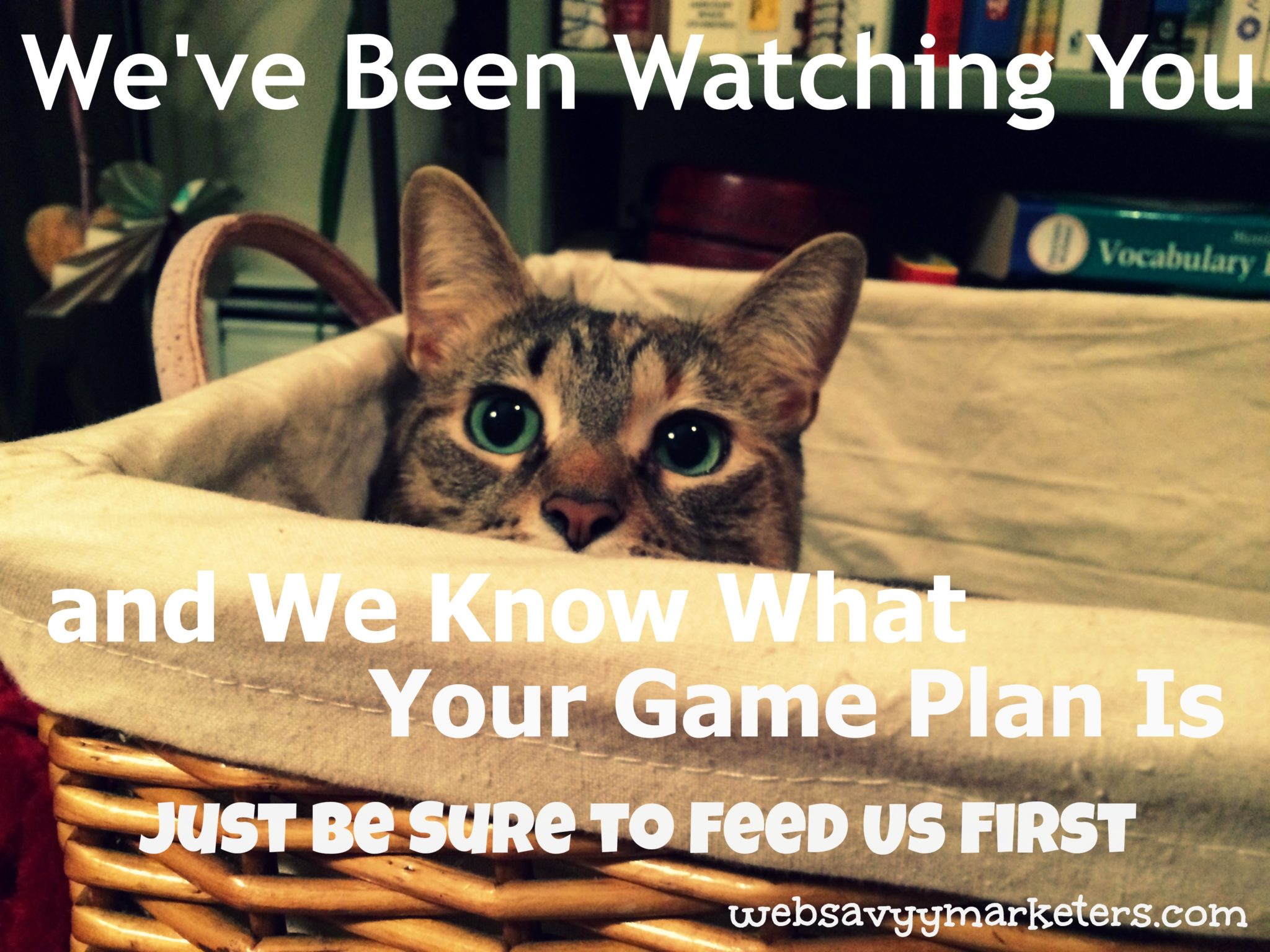
They’ve been watching our every move.


Tumblr via giphy.

Filed Under: Kacee's Posts, Marketing, Social Media

+Post Ads Make Google the Smartest Fish in the Web Stream

December 12, 2013 Beth Devine

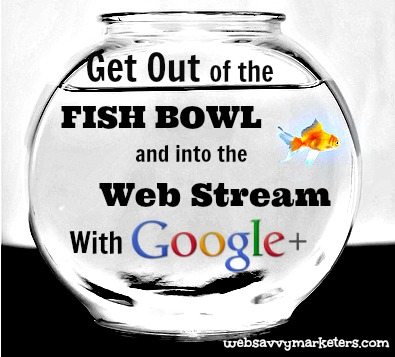
Google+ social media streamGoogle’s new +Post Ads are making the Internet one giant social stream. With the introduction of Google+ social posts as paid advertising on selected websites, more people are going to join the conversation.

The social stream on Google+ is going to become a raging river.

But not in a bad way. It’s going to grow not only conversations. Growing Google+ is going to build relationships between the brand and consumer unlike any other social platform.

“Rather than to talk at them, we wanted to talk with them,” said Monica Peterson, Director of Social Media, Toyota USA.

As Peterson says, delivering “the right message, at the right time, to the right person” is key to growing your brand. With Google+ +Post Ads, consumers can talk within the advertising itself.

How cool is that?

Advertising on social media sites is like crashing a party. Hardly an effective method for promoting your product. But imagine having the opportunity to share your thoughts on a strategically placed social media post that’s placed outside the social media platform.

Clearly, Google imagined just that. They also thought up a way for advertisers to pay for Google+ advertising in the process. Pure genius.

As Mark Traphagen explains, Google+ +Post Ads will show up as live Google+ posts embedded where we would traditionally see static banner ads on a website, Users can comment on +Post Ads, +1 them, and share them with friends. Because the advertiser will get a notification of every person who engaged with the post, it’s like a landing page on a site where you can capture email addresses.

For a brand, this definitely changes what you’ll say to your audience. For the consumer, how the message is crafted will have everything to do with how you impact the conversation.

The way we interact on social media increasingly defines who we are. From one fish to another, I am excited to see how this all plays swims out.

Folks who haven’t set up a Google+ profile yet will be enticed to do so, and those who’ve merely created one so they could do a Hangout will begin doing more than sticking a toe into the water.

Google+ moves forward as the smartest way to interact on the web. It’s no wonder that Albert Einstein is the most talked about person there, compared to Rihanna on Facebook and Bieber on Twitter.

Google “who is the most talked about person on Google+” and see for yourself.

As Dustin W. Stout so aptly put it, “G+ = IQ². Enough said.”

Watch how Toyota reaches out with new Google+ Post Ads.

This work, “fish bowl,” is a derivative of “Creative Commons flickr photo” by Dean McCoy, used under CC BY 2.0.

Filed Under: Google Tips, Internet Marketing 101, Kacee's Posts, Marketing, Social Media, Tools & Tips

  • « Previous Page
  • 1
  • 2
  • 3
  • 4
  • 5
  • 6
  • …
  • 9
  • Next Page »

Recent Posts

  • Blindly Embracing Technology
  • Improve Productivity, Save Energy and Reduce Waste!
  • Youth vs Experience – What’s the Best Marketing Approach?
  • Second Chance Hiring is the Most Untapped Talent Pipeline
  • Do Your Consultants Treat Your Business Like Their Own?

Search this site

Call Us

860-432-8756

Our Location

222 Pitkin Street, Suite 125
East Hartford, CT 06108
Phone: 860-432-8756

Services

  • Marketing Services
  • Strategic Planning
  • Internet Marketing
  • Multi-Media Productions
  • Marketing Programs

Talk to Us

Follow us, subscribe to us, email us, or call us at 860-432-8756. We’ll use our Super Savvy Tool Belt to stay in touch however you prefer.

  • Email
  • Facebook
  • LinkedIn
  • Pinterest
  • Twitter
Sign Up for Email Updates
For Email Marketing you can trust.

Copyright © 2026 Web Savvy Marketers, LLC · 222 Pitkin Street, Ste. 125 · East Hartford, CT 06108 · 860-432-8756 ·
Privacy Policy | Terms & Conditions | Cookie Policy · Log in